


Legal teams spend thousands of hours on repetitive document work, appeal letters, compliance responses, case summaries. Most of it follows patterns that AI can learn. We build systems that do exactly that.
Legal professionals are expensive. That’s by design, their judgment, interpretation, and strategic thinking are what clients pay for. But a significant portion of billable hours goes toward work that doesn’t require any of that, work that legal document automation was designed to solve: drafting structured documents from established templates, cross-referencing policy language, formatting appeal arguments that follow predictable patterns.
Consider what happens when a law firm or legal services company handles appeal cases at scale:
A typical legal appeal, whether it’s an Amazon seller account reinstatement, an insurance denial challenge, or a regulatory compliance response, requires 5 to 15 hours of attorney or paralegal time. The writer researches the specific violation category, reviews past successful appeals for relevant language, drafts each section to address the platform’s or regulator’s requirements, and formats the document for submission. Even experienced attorneys who have written hundreds of appeals go through this cycle every time because each case has unique facts layered on top of repeatable structure.
The irony is that successful legal documents follow discoverable patterns. The best appeal letters share structural DNA: how they frame the root cause, how they present corrective actions, how they close. A senior attorney knows these patterns intuitively after years of practice. The problem is that pattern recognition doesn’t scale. You can’t hire ten more senior attorneys and expect each of them to carry that same institutional knowledge from day one.
For legal services companies looking to reduce legal drafting costs with AI, the ROI is immediate. At $2,000 to $5,000 per manually drafted appeal, serving 50 clients a month requires either a large team or a long waitlist. Neither is ideal for the business or the clients waiting for resolution.
Legal automation is not about replacing attorneys. It’s about removing the bottleneck between what an attorney knows and how fast that knowledge can be applied to a new case.
The most effective approach combines two capabilities that didn’t exist at this level five years ago:
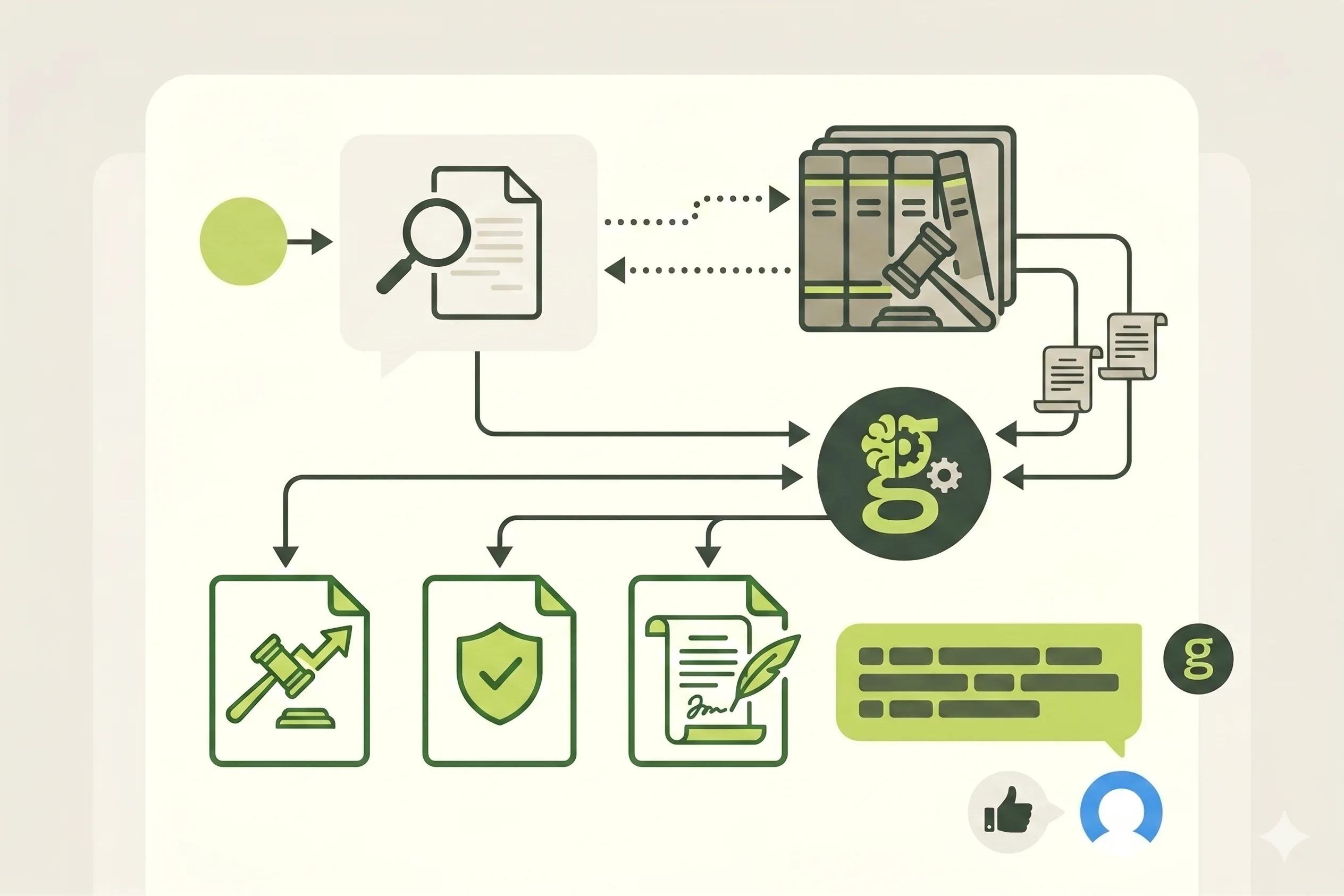
Instead of training an AI model from scratch on legal language, which is expensive, slow, and often produces generic output, the stronger approach is retrieval-augmented generation. This means the AI searches through a curated library of real, successful documents to find the most relevant examples for the current case, then uses those examples as context when generating new content.
The difference is significant. A general-purpose AI model asked to write an appeal letter will produce something that sounds reasonable but lacks the specificity that gets results. A RAG-equipped system pulls from actual successful cases, the exact phrasing, the structural patterns, the citation style, and generates documents that carry the same weight.
Not every legal document type requires the same approach. An AI system that handles appeals, for instance, needs to recognize which of 20+ violation categories applies, match the right root causes to the right corrective action language, and adjust tone based on whether it’s a first submission or an escalation. This classification layer is what separates a useful tool from a glorified text generator.
The output is a draft that a qualified professional reviews, edits, and approves. The AI handles the 80% that is pattern and structure. The attorney handles the 20% that requires judgment. This isn’t a philosophical concession, it’s the architecture that produces the best outcomes.
A legal services company specializing in Amazon seller account reinstatements came to us with a scaling problem. Their attorneys were handling appeal cases across 22 distinct violation categories — from intellectual property disputes to supply chain authenticity claims to code of conduct violations. Each appeal required custom research, specific policy references, and a structured five-section argument.
The team was spending 5 to 15 hours per appeal at a cost of $2,000 to $5,000 per case. With demand growing, they needed a way to maintain quality while handling significantly more volume.
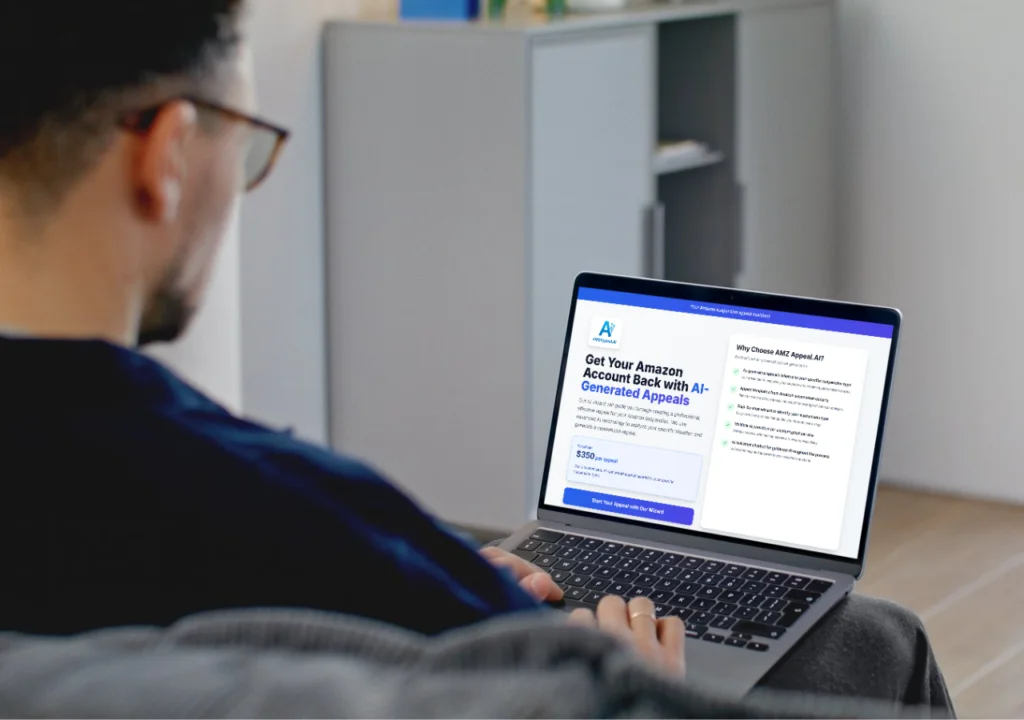
We built Amazon Appeal Wizard, a full-stack AI platform that automates Amazon seller appeal letters, generating professional, submission-ready documents in under 3 minutes.
The system walks the user through a guided intake form that captures the violation type, seller information, root cause details, corrective actions already taken, and preventive measures planned. It then generates a complete five-section appeal document: opening and context, root cause analysis, corrective actions, preventive measures, and professional closing.
But the real differentiator is the intelligence behind the generation.
We built a retrieval-augmented generation (RAG) pipeline anchored to 46 real, successful appeal documents provided by the client’s legal team. These aren’t synthetic examples, they’re actual appeals that resulted in account reinstatements.
When a new appeal is requested, the system:
The platform also includes a full admin panel where the legal team controls every aspect of the AI’s behavior: prompt templates per section, token limits, temperature settings, and document management. They can upload new successful appeals to the RAG library, run A/B tests on different prompt configurations, and roll back to any previous version with one click.
Tech stack: Next.js 14, OpenAI GPT-4o-mini (streaming), Google Gemini 2.5 Flash (RAG), AWS DynamoDB, S3, Amplify.
The platform now serves 350+ legal professionals and Amazon sellers, with over 2,000 appeals generated since launch.
The most telling metric: the client’s legal team now handles 4x the case volume with the same headcount. The attorneys spend their time on strategy and review instead of first-draft composition.
Every legal team has its own document types, compliance requirements, and workflow patterns. Here’s what AI automation can handle in the legal space, based on what we’ve actually built, not what’s theoretically possible.

AI-powered drafting for structured legal documents, appeals, compliance responses, demand letters, case summaries. Using RAG to match new cases to relevant precedents from your own document library.
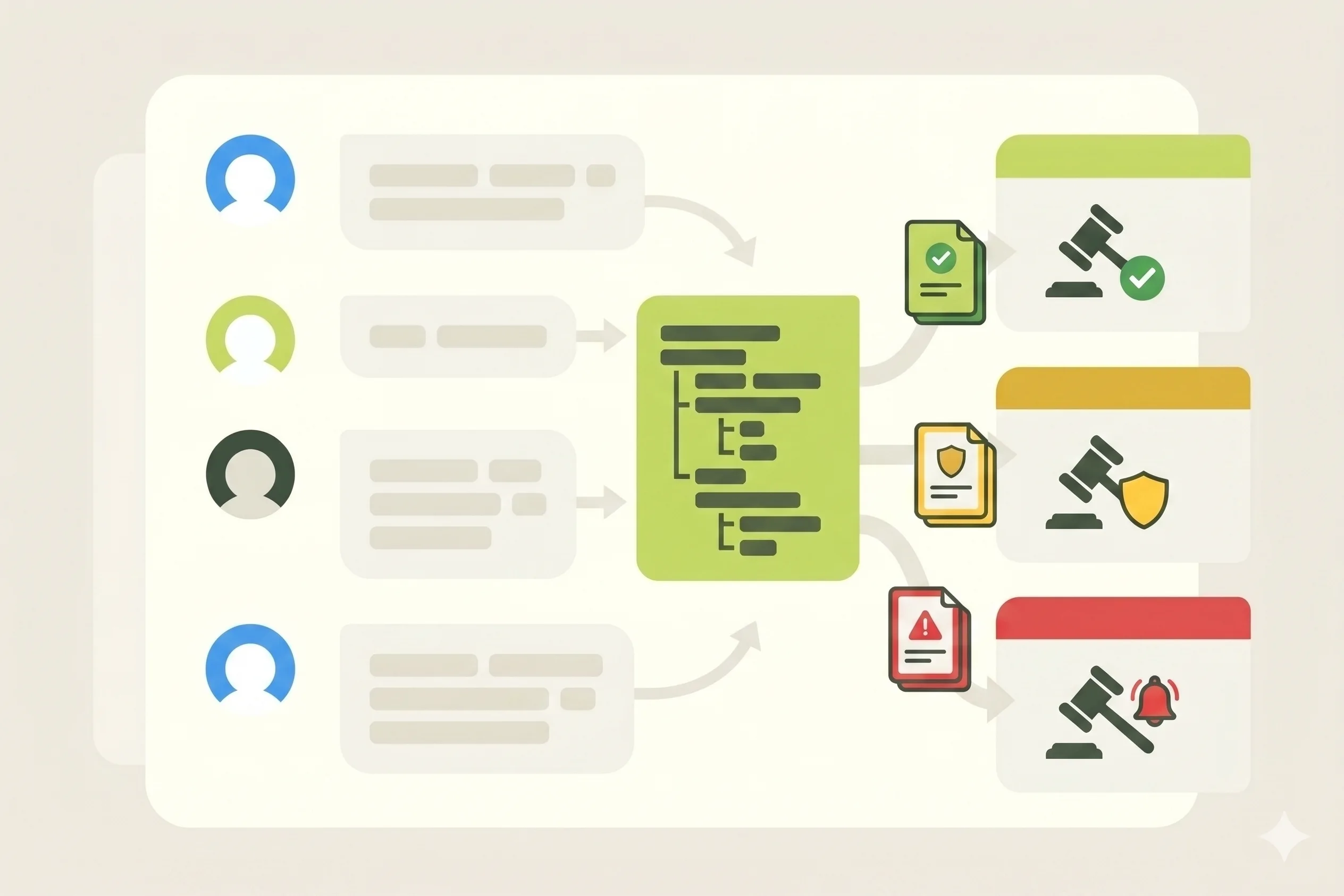
Automatically categorize incoming cases, complaints, or filings by type, severity, and required response framework. Route each case to the right workflow without manual triage.
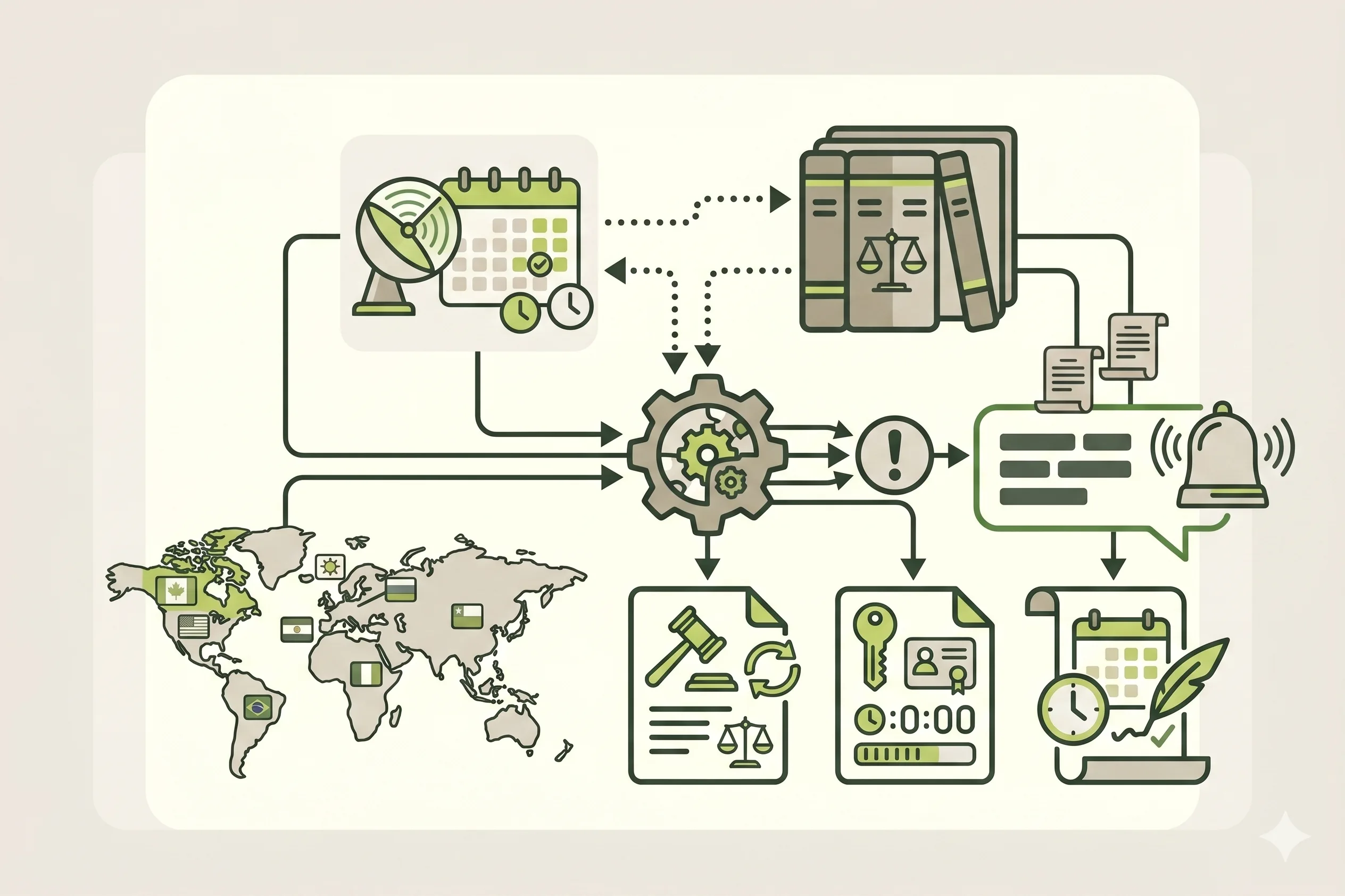
Track regulatory changes, license expirations, filing deadlines, and policy updates across multiple jurisdictions. Surface only what requires action.
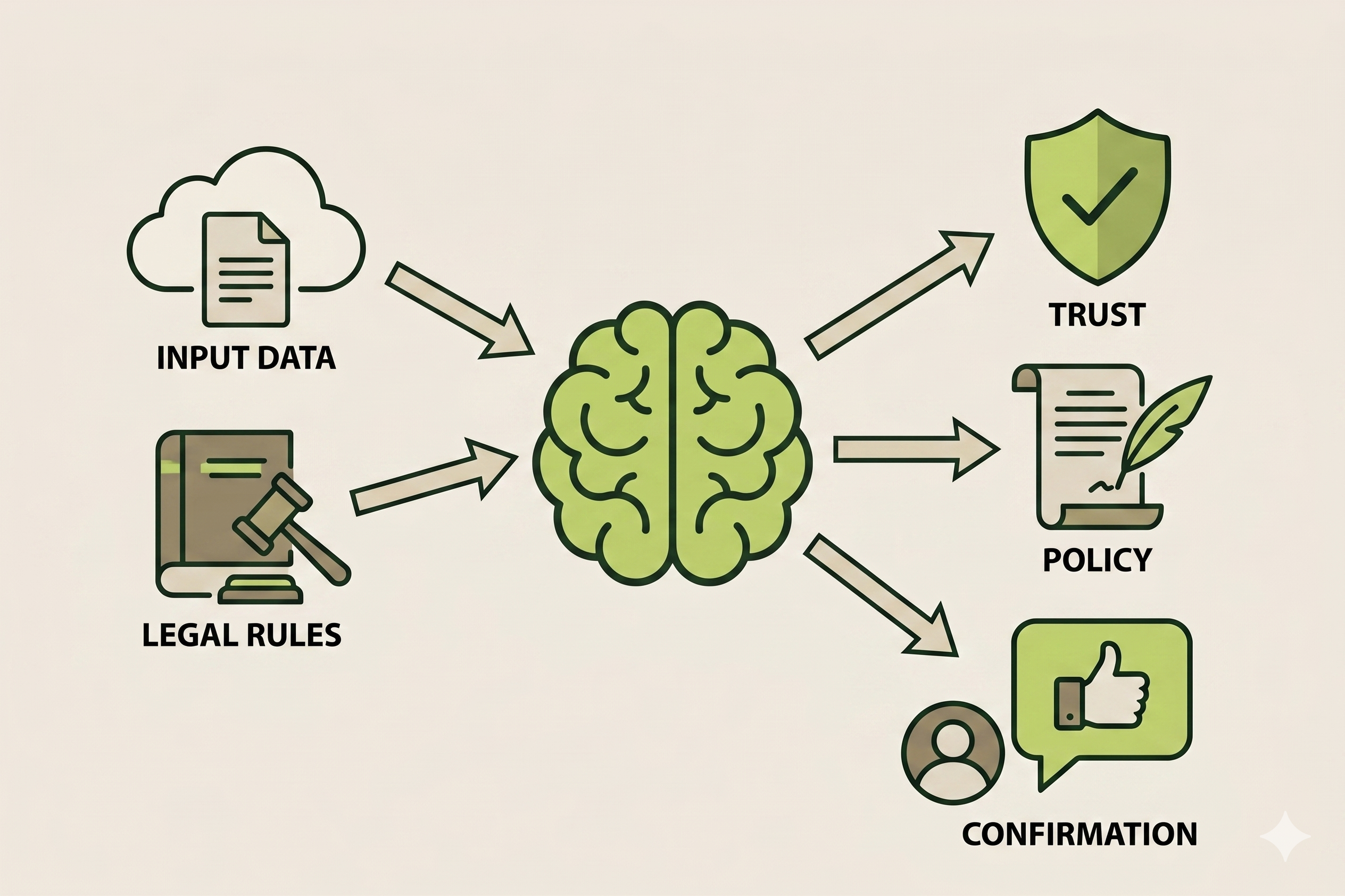
Replace manual intake forms and email chains with guided, intelligent intake systems that collect the right information upfront and reduce back-and-forth by 60-70%.
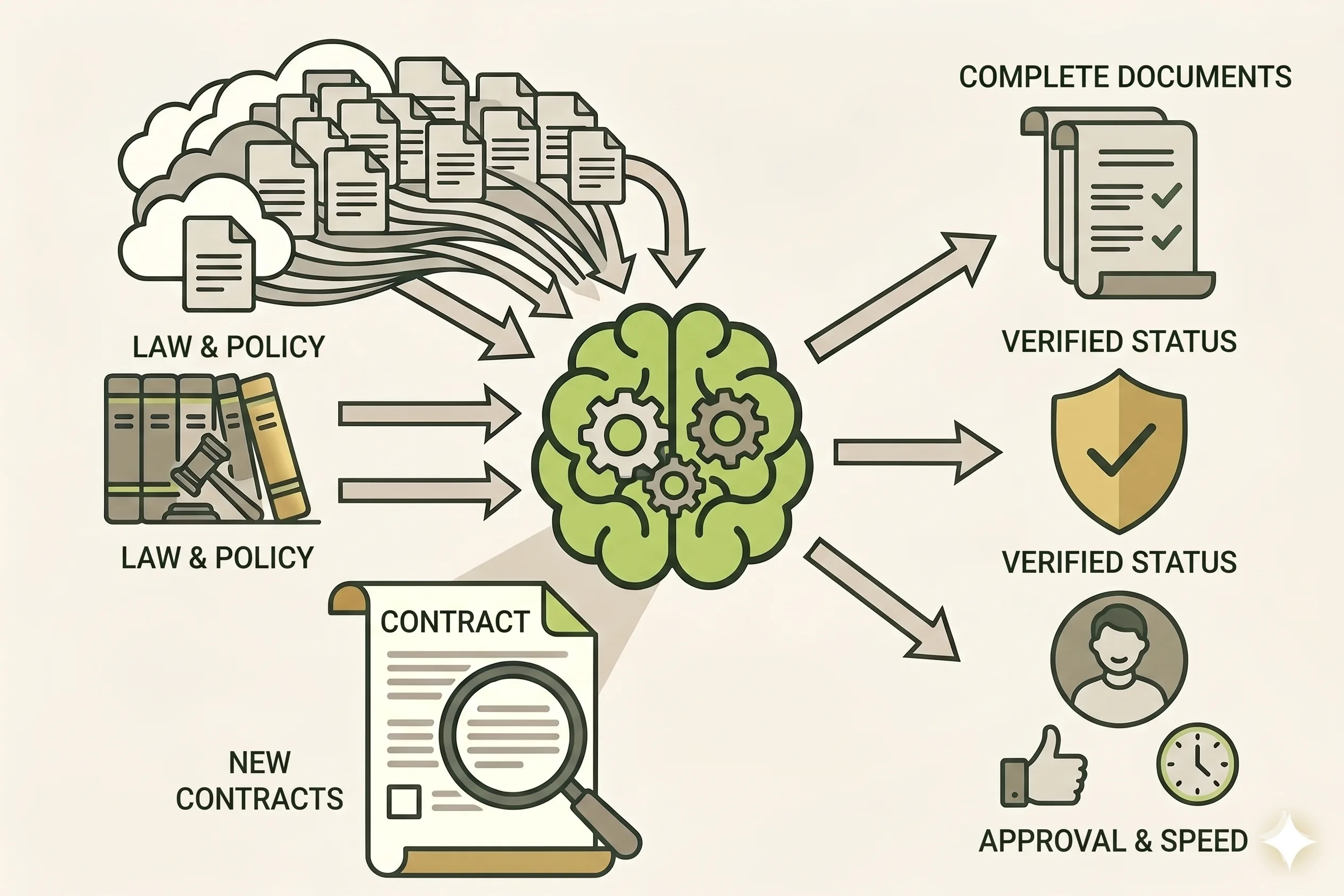
Extract key terms, flag non-standard clauses, and compare contract language against your firm's preferred templates — at volume, without paralegals spending hours on each document.

Search your firm's historical case files, successful motions, and document libraries using semantic search instead of keyword matching. Find what's relevant, not just what contains the right words.

End-to-end email handling with automated legal workflows: incoming messages are analyzed for intent, enriched with relevant case data, and responded to automatically for routine inquiries. Complex matters get escalated with full context attached. Handles multi-language support out of the box.
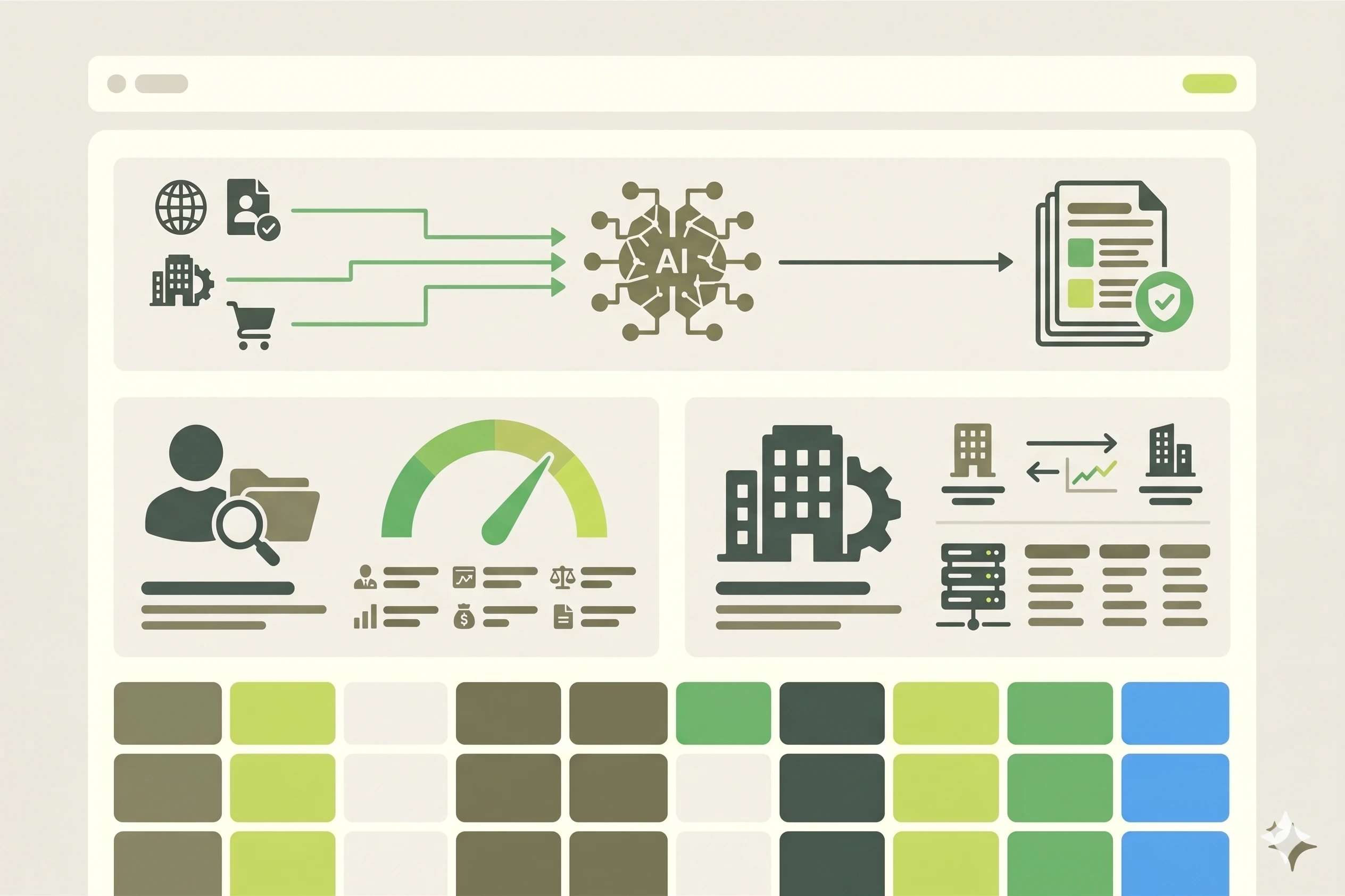
Custom web applications that aggregate data from multiple public and private sources, apply AI-driven risk scoring, and produce structured reports. Useful for background checks, vendor assessments, or pre-litigation research.

30 minutes. You describe the problem. We ask questions.

We define what version one looks like — scope, cost, timeline.

We design the system before building it. You review and approve.

Weekly check-ins. Working progress, not status reports.

Deployed to production. You own the code. Your team runs it.
An AI automation agency builds custom systems that automate repetitive business processes using artificial intelligence. This includes workflow automation, AI-powered web applications, document generation, data enrichment pipelines, and intelligent customer service systems. Unlike generic software agencies, we specialize in embedding AI models, like GPT-4o and Gemini, directly into the workflows where they create the most value.
Regular automation follows fixed rules: if X happens, do Y. AI automation adds intelligence to those decision points, it can classify emails by intent, generate documents from context, score risk across multiple data sources, and handle scenarios that don’t fit neatly into if then logic. The result is automation that handles the ambiguous middle ground your team currently manages manually.
Our deepest experience is in legal services, construction, and e-commerce, three industries where we’ve shipped production platforms with published case studies and real metrics. That said, the underlying skills (workflow automation, AI integration, full-stack development) apply across industries. If your business has repeatable processes involving data, documents, or communication, we can likely help.
It depends on the scope. A focused workflow automation connecting a few tools is a different investment than a full-stack AI web application with user management, payments, and admin panels. We scope every project in detail before quoting, you’ll know the exact cost, timeline, and deliverables before any work begins. No vague estimates.
Most projects ship in 2 to 8 weeks depending on complexity. A workflow automation connecting existing tools might take 2-3 weeks. A custom AI web application with RAG pipelines, user authentication, and payment infrastructure typically takes 4-8 weeks. We scope tightly and build in phases so you see working progress throughout.
No. Most of our clients come to us with a business problem, not a technical spec. You describe the process that’s eating your team’s time, we handle the technical translation, architecture decisions, and implementation. Our discovery call is designed to bridge that gap in 30 minutes.
We build with a modern, proven stack: React, Next.js, and TypeScript for frontends; Supabase, PostgreSQL, and AWS for backends; OpenAI GPT-4o and Google Gemini for AI; n8n and Make.com for workflow orchestration; and Stripe for payments. We choose tools based on what the project needs, not what’s trending.
Yes. Every project includes full source code ownership, documentation, and handover. There’s no lock-in, no proprietary frameworks, and no dependency on us to keep things running. Your team, or any competent developer, can maintain and extend what we build.
We’ll tell you. We’ve turned down projects where automation would create more complexity than it solves. The discovery call is free and takes 30 minutes, even if the answer is “not yet,” you’ll walk away with a clearer picture of what’s possible and when it makes sense to revisit.
Book a free discovery call. It’s a 30-minute conversation where you walk us through the problem and we give you an honest assessment. If there’s a fit, we’ll send a scoping proposal within a few business days, scope, timeline, and cost. No obligation either way.
Most legal teams know which processes eat the most time. If you’ve been thinking about how AI could help, but want to talk to people who’ve actually built it, we should talk.