.svg)
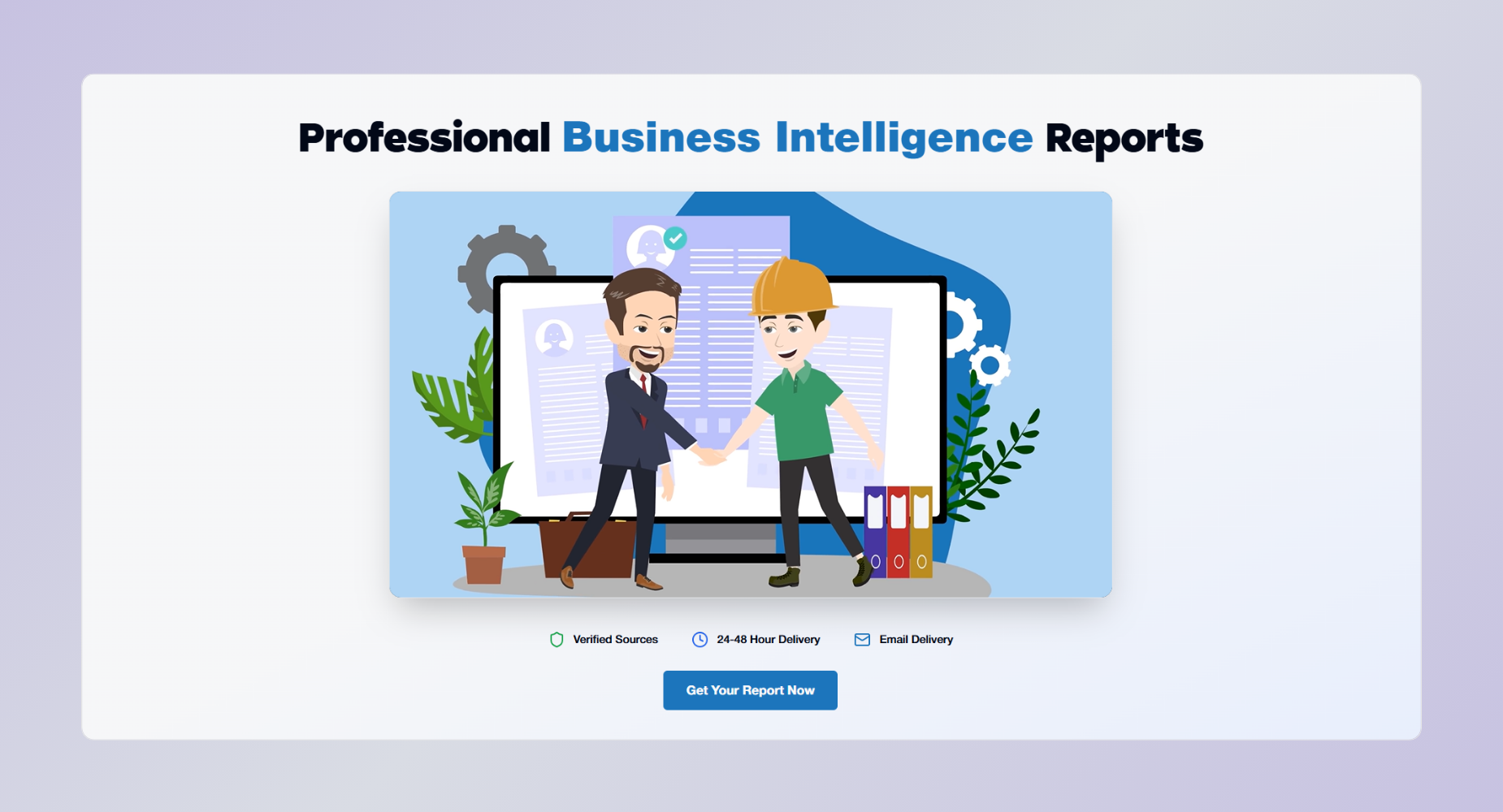
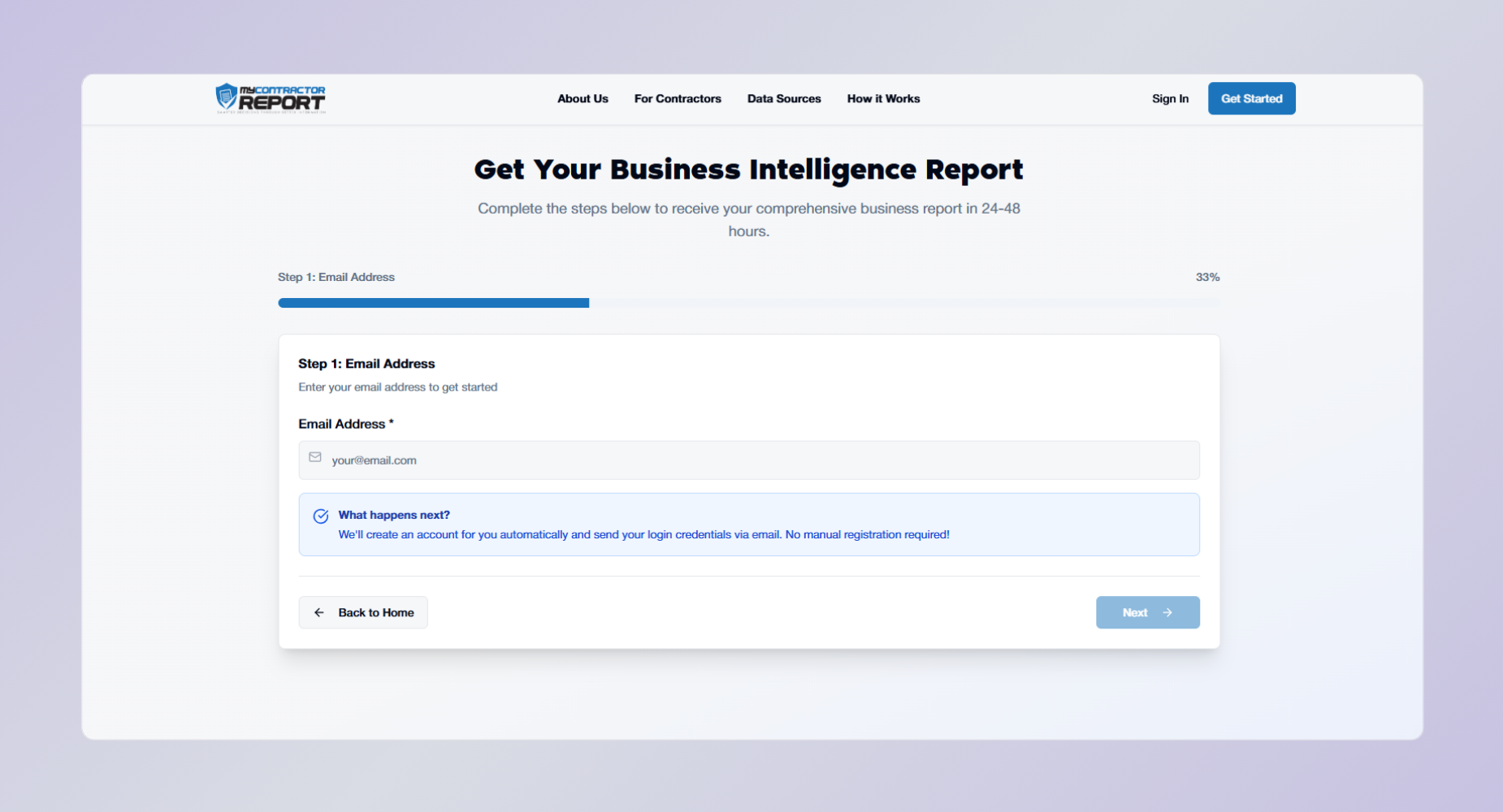
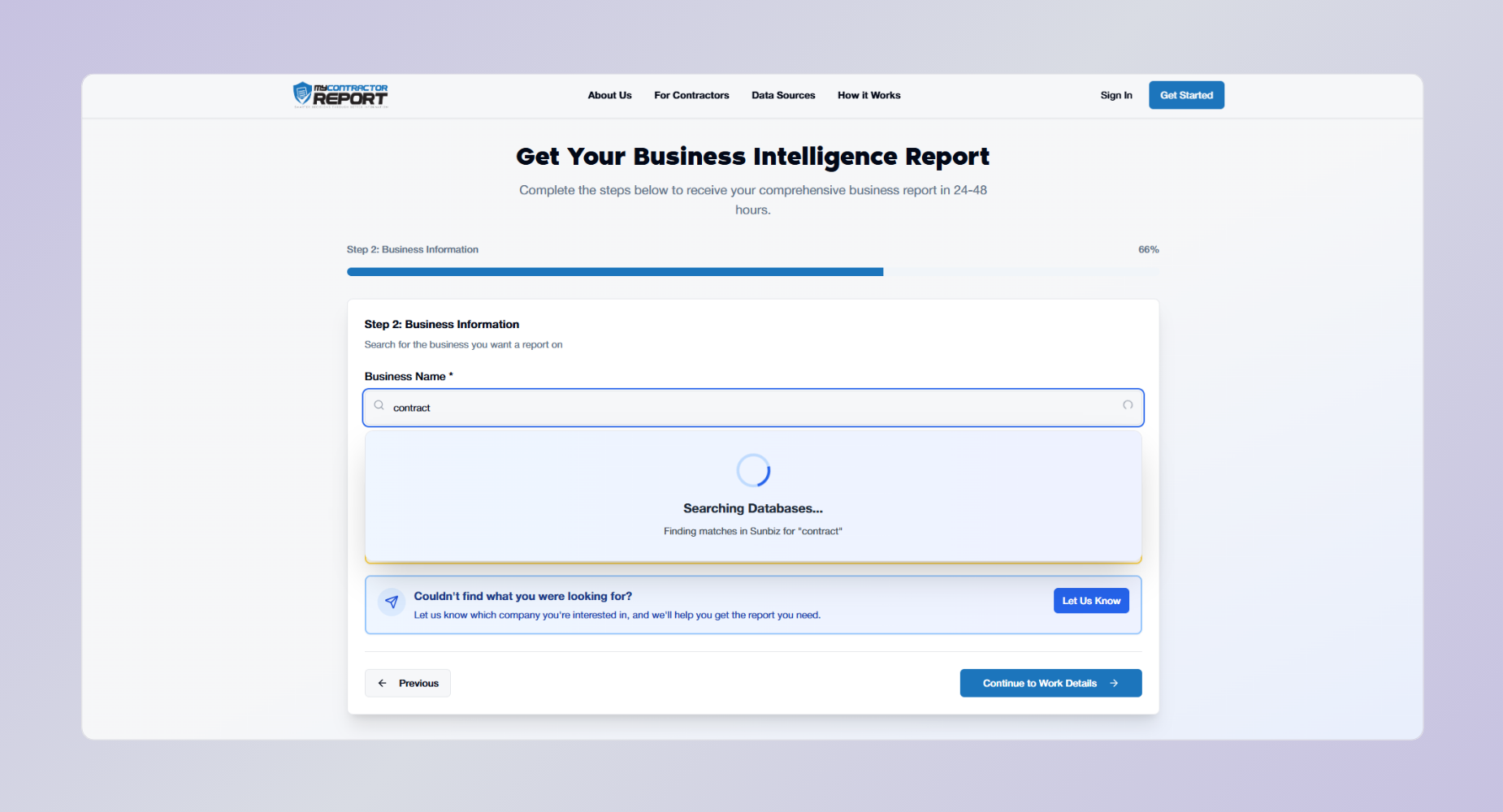
Homeowners and property managers were waiting 3 to 5 days and paying $500+ for a contractor background check. We built My Contractor Report, a platform that queries five government databases in parallel and delivers an AI risk-scored PDF report in under 30 seconds, for $19.99.
Amplence specializes in AI-powered data platforms that turn complex multi-source lookups into instant, actionable reports.
Homeowners, property managers, and general contractors had no fast, affordable way to verify a contractor's legitimacy before hiring. Old-school background checks meant calling licensing boards, court systems, and insurance providers one by one. That process cost over $500 and ate up 3 to 5 business days. Meanwhile, fraudulent contractors cost US homeowners more than $3 billion every year. Our client needed a platform that could pull from multiple government databases automatically, apply smart risk scoring, and hand back a clean, professional report that anyone could read and act on right away.
The first engineering challenge was speed. Five separate government systems, state licensing boards, court records, insurance registries, BBB ratings, and contractor complaint filings, each with their own response times and data formats. Rather than querying them in sequence, we engineered a concurrent query engine that fires all five requests simultaneously. Results arrive, normalize, and merge into a single unified data object in under 30 seconds, collapsing what previously took 3–5 business days of manual phone calls and form requests into a single automated process.

Raw government data alone is not actionable for a homeowner. License numbers and court case IDs mean nothing without context and interpretation. We built a Google Gemini-powered scoring model that weighs every returned data point, license status and expiry, complaint volume and nature, lawsuit history, insurance validity, and BBB standing, against a calibrated risk framework. The model outputs a normalized risk score alongside a plain-language summary that tells the user, clearly and without jargon, whether to hire, proceed with caution, or avoid a contractor entirely.
Every completed verification is automatically formatted into a branded, professional PDF report. The document includes a visual risk score indicator, a section-by-section breakdown of each data source, direct citations to the underlying government records, and a clear recommendation at the top. Reports are delivered immediately to the user's registered email via SendGrid and are permanently accessible inside their account dashboard, ready to share with a property manager, insurer, or legal advisor if needed.
The platform runs on a subscription model with tiered report access, all handled through Stripe. Customers get a clean React dashboard where they can run new searches, pull up their report history, and manage their billing. A separate admin panel gives the operations team live visibility into query volumes, database response issues, Stripe revenue, and any government API failures, so the platform can be monitored and managed without looping in a developer every time something needs attention.


The platform is built on React 18 with Supabase as the backend layer, handling authentication, user data, report storage, and real-time dashboard state. The parallel database query layer runs as five independent serverless functions, meaning a slow or temporarily unavailable government system never blocks or delays the results from the other four. All five results are merged and normalized by a central aggregation function before being handed to the Gemini scoring engine.
Parallel serverless architecture is the reason the platform can deliver results in 30 seconds that previously took days. Each query is isolated, independently retried if it fails, and logged separately, giving the operations team full visibility into which data sources are performing and which may need fallback handling.
Real-time risk recalculation ensures the platform stays accurate over time. Contractor records are not static, licenses expire, new complaints are filed, insurance lapses. The system is designed to recalculate risk scores on demand whenever a user re-runs a report, and to proactively flag users when a previously verified contractor's status changes in a meaningful way. Verification is not a one-time event; it is an ongoing signal.

We engineered a concurrent query system that fires requests at all five sources simultaneously, state licensing boards, court records, insurance registries, BBB ratings, and complaint filings, then normalizes the results into one unified format. Each query runs as an independent serverless function, so a slow or down database never blocks the other four.
The Gemini-powered scoring engine weighs every data point, license status and expiry, complaint history, lawsuit records, insurance validity, BBB standing, against a calibrated risk framework. The output isn't just a number, it's a plain-language recommendation: hire, proceed with caution, or avoid.
Verification isn't a one-time snapshot. The system recalculates risk scores on demand whenever a user re-runs a report, and can flag users when a previously verified contractor's status changes, a license expiring or a new complaint being filed, for example.
Yes. There's a separate admin dashboard giving the operations team live visibility into query volumes, database response issues, Stripe revenue, and any government API failures. The team can monitor and manage the platform day to day without looping in engineering.
This platform took 3 months from scoping to launch, built on React 18 and Supabase. The bulk of the engineering time went into the parallel query architecture and normalizing five inconsistent government data formats into one clean report.
Practical systems that reduce manual work, lower costs, and help teams scale.