.svg)
Every business has processes that run on copy-paste, manual handoffs, and someone remembering to check something. We build automations that handle those steps, reliably, around the clock, without the errors.
The most expensive processes in a business aren’t the complex ones. They’re the simple ones that happen hundreds of times a week, the ones nobody has automated because each individual instance only takes five minutes.
Copy data from an email into a spreadsheet. Check an order status and send a customer update. Download a report, reformat it, and email it to a stakeholder. Move a lead from one system to another. Flag an overdue invoice.
Five minutes each. Fifty times a day. That’s over four hours of human time consumed by tasks that don’t require human judgment. Over a year, it adds up to more than a thousand hours, the equivalent of half a full-time employee doing nothing but copying, pasting, and clicking.
But the time cost is only the beginning. The real damage compounds in three ways:

When a human copies an order number, a customer name, or a dollar amount between systems, mistakes happen. A single digit wrong in an order ID triggers a chain of downstream problems, wrong shipment, wrong invoice, wrong customer communication. The error is cheap to make and expensive to fix.
Manual workflows run on human availability. If the person responsible for a step is in a meeting, on vacation, or handling something else, the workflow stalls. Automated workflows run at the speed of the systems they connect, seconds, not hours.
The biggest cost is often the hardest to see. Your team spends significant time on connective work, moving data between tools, sending status updates, checking whether something was completed, that produces no direct value. This labor doesn’t show up on a task list, but it consumes real capacity.
Most businesses don’t have a technology problem. They have a connectivity problem. The tools exist. They just don’t talk to each other.
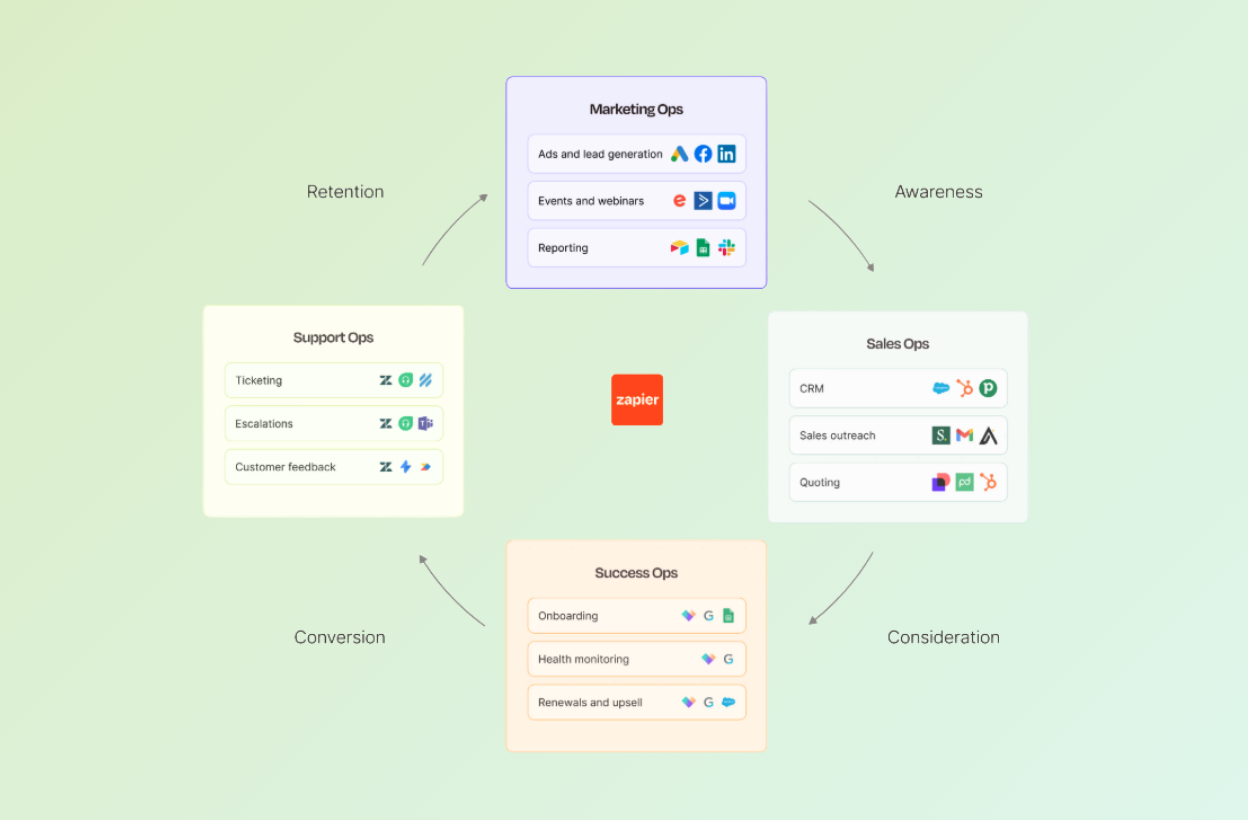
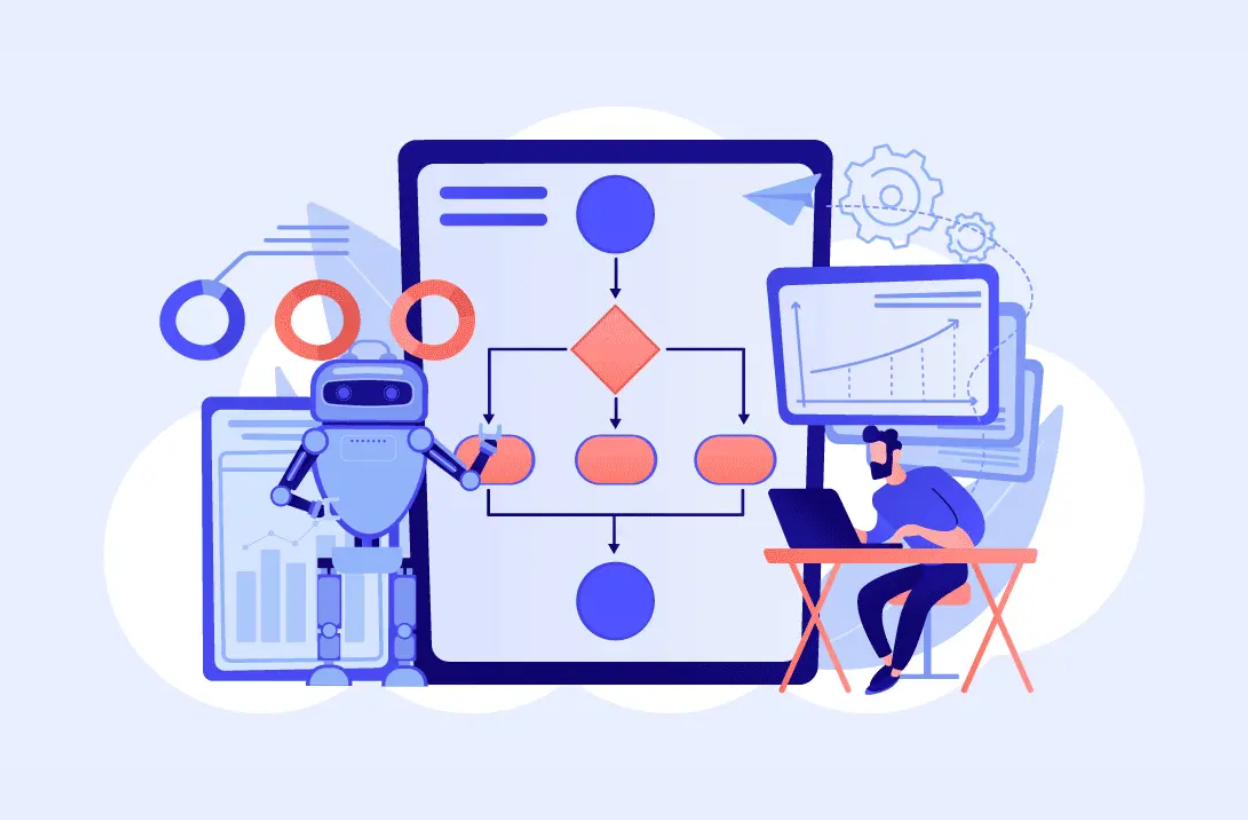
We don’t start with tools. We start with the process, acting as your business automation consultant before we become your builder.
Before we open n8n or Make.com or write a single line of code, we map what’s actually happening. Not the idealized version in your process documentation, the real sequence of steps your team performs, including the workarounds, the exceptions, and the edge cases that only show up on Fridays. This mapping identifies which steps are automatable, which need human checkpoints, and where the highest-value opportunities are.
We architect the workflow before writing any code. This includes defining triggers (what starts the workflow), actions (what happens at each step), decision logic (how the system handles different scenarios), error handling (what happens when something fails), and escalation paths (when a human needs to step in). You review and approve the design before we build.
We build the workflow using the tools best suited to your stack:
n8n: Our go-to for complex, multi-step workflows that need custom logic, API integrations, and self-hosted reliability. Best for workflows with branching conditions, data transformation, and high volume. As an n8n automation agency, we’ve built complex multi-step workflows across industries, our n8n expertise is battle-tested, not theoretical.
Make.com: Strong for visual workflows that need to connect popular SaaS tools quickly. Good for teams that want to monitor and adjust automations themselves. Our Make.com automation services are ideal for teams that want visual workflow builders with the flexibility to customize.
Custom code: When the workflow requires capabilities beyond what any no-code platform offers, headless browser scraping, complex AI analysis, real-time data enrichment, we build custom integrations using Node.js, Python, or serverless functions.
The answer depends on your workflow complexity, volume, and whether you need self-hosted reliability or visual simplicity. We advise based on your specific case.
Every integration connects directly to your platforms via official APIs, Shopify, Airtable, Slack, Gmail, CRMs, databases, and more. The platform choice follows the workflow complexity, not the other way around.
We test against real data and edge cases before going live. After deployment, we monitor for failures, unexpected inputs, and performance issues. Every workflow includes logging so you can see exactly what happened at each step, because automations that break silently are worse than no automation at all.

A complete AI-powered customer service pipeline that handles the full email lifecycle, from capture and AI classification to Shopify order enrichment and auto-response across four languages. Built with n8n, OpenAI GPT-4o, and direct Shopify API integration. Includes automated ticket routing, sentiment detection, and a real-time monitoring dashboard.
emails handled monthly

A contractor verification platform that queries five government databases in parallel, applies an AI-powered risk scoring algorithm, and generates professional PDF reports. Built with React 18, Supabase, Stripe, and Google Gemini. Includes customer and admin dashboards, subscription management, and automated email delivery.
reports generated

Not a prototype. Not a demo. A production-ready workflow running in your own accounts, connected to your real tools, processing your actual data.
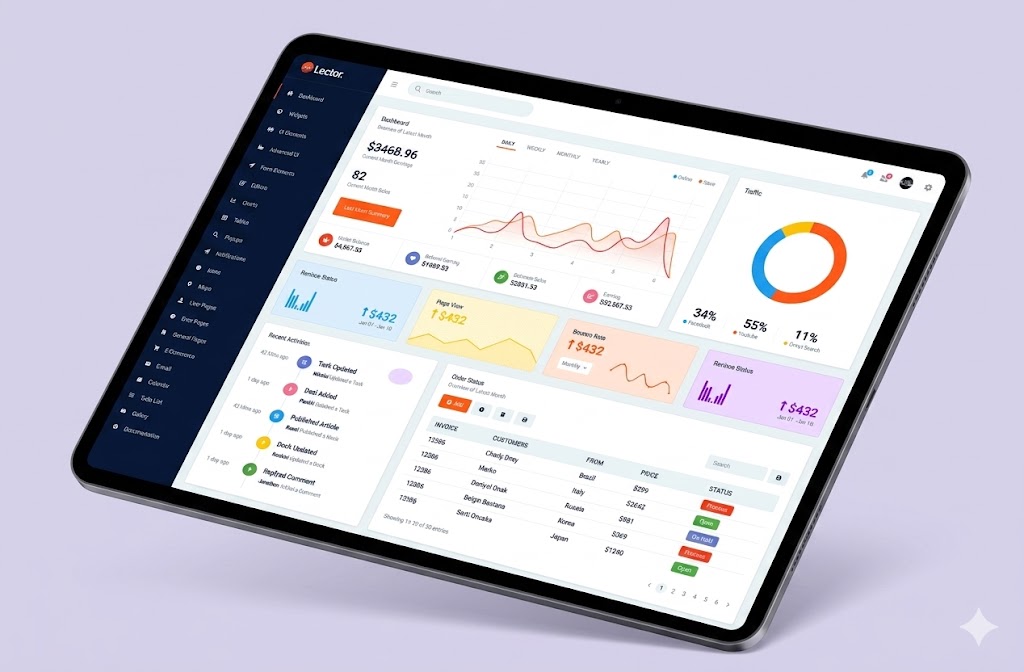
Direct API integration automation connecting the platforms your team already uses, Shopify, Airtable, Google Workspace, Slack, HubSpot, Stripe, custom APIs. No screen-scraping hacks or CSV-based workarounds. If it has an API, we can automate around it.

Built-in handling for failures, unexpected inputs, and edge cases. Retry logic, fallback paths, and failure alerts in every workflow. When something falls outside the automated path, it gets routed to the right person with full context, not silently dropped.

Every workflow run is logged with timestamps, inputs, outputs, and status. You can see exactly what happened, when, and troubleshoot issues without guessing. You'll know when something needs attention before your customers do.

Clear documentation of every workflow: trigger conditions, data flow, decision points, and maintenance instructions. Your team should be able to understand and maintain what we build, not depend on us permanently.
When a workflow benefits from AI, email classification, content generation, data extraction, sentiment analysis, we integrate models like GPT-4o or Gemini directly into the automation pipeline. Not as a novelty, but where it genuinely removes a manual step.
AI AutomationAn AI automation agency builds custom systems that automate repetitive business processes using artificial intelligence. This includes workflow automation, AI-powered web applications, document generation, data enrichment pipelines, and intelligent customer service systems. Unlike generic software agencies, we specialize in embedding AI models, like GPT-4o and Gemini, directly into the workflows where they create the most value.
Regular automation follows fixed rules: if X happens, do Y. AI automation adds intelligence to those decision points, it can classify emails by intent, generate documents from context, score risk across multiple data sources, and handle scenarios that don’t fit neatly into if then logic. The result is automation that handles the ambiguous middle ground your team currently manages manually.
Our deepest experience is in legal services, construction, and e-commerce, three industries where we’ve shipped production platforms with published case studies and real metrics. That said, the underlying skills (workflow automation, AI integration, full-stack development) apply across industries. If your business has repeatable processes involving data, documents, or communication, we can likely help.
It depends on the scope. A focused workflow automation connecting a few tools is a different investment than a full-stack AI web application with user management, payments, and admin panels. We scope every project in detail before quoting, you’ll know the exact cost, timeline, and deliverables before any work begins. No vague estimates.
Most projects ship in 2 to 8 weeks depending on complexity. A workflow automation connecting existing tools might take 2-3 weeks. A custom AI web application with RAG pipelines, user authentication, and payment infrastructure typically takes 4-8 weeks. We scope tightly and build in phases so you see working progress throughout.
No. Most of our clients come to us with a business problem, not a technical spec. You describe the process that’s eating your team’s time, we handle the technical translation, architecture decisions, and implementation. Our discovery call is designed to bridge that gap in 30 minutes.
We build with a modern, proven stack: React, Next.js, and TypeScript for frontends; Supabase, PostgreSQL, and AWS for backends; OpenAI GPT-4o and Google Gemini for AI; n8n and Make.com for workflow orchestration; and Stripe for payments. We choose tools based on what the project needs, not what’s trending.
Yes. Every project includes full source code ownership, documentation, and handover. There’s no lock-in, no proprietary frameworks, and no dependency on us to keep things running. Your team, or any competent developer, can maintain and extend what we build.
We’ll tell you. We’ve turned down projects where automation would create more complexity than it solves. The discovery call is free and takes 30 minutes, even if the answer is “not yet,” you’ll walk away with a clearer picture of what’s possible and when it makes sense to revisit.
Book a free discovery call. It’s a 30-minute conversation where you walk us through the problem and we give you an honest assessment. If there’s a fit, we’ll send a scoping proposal within a few business days, scope, timeline, and cost. No obligation either way.
A quick 20 minute call with our CEO, Muneeb, to see how we can help you
Empowering businesses with innovative solutions. Let’s create something amazing together.


