.svg)
You Handle the Business.Your customer service inbox is a repeating loop, order status, where’s my tracking, return requests, damage reports. AI can handle most of it instantly, in four languages, around the clock. We build the systems that make that happen.
Every Online StoreCustomer service is one of the least talked-about costs in e-commerce. It’s not the kind of expense that shows up on a pitch deck, but for businesses looking to automate ecommerce operations, it’s often the first bottleneck that surfaces.

Here’s the part that nobody warns you about: the better your store performs, the more customer emails you receive. More orders mean more “where is my package” inquiries, more return requests, more damage reports. A store processing 200 orders a day might receive 60 to 80 service emails daily. Each one takes 4 to 8 minutes to handle properly, look up the order, check the shipping status, check the return policy, draft a response in the customer’s language, send it. That’s 5 to 10 hours of human work per day on emails alone.
If you’re selling across Europe — or anywhere with a multilingual customer base, every email needs to be answered in the language it was written in. Dutch customers expect Dutch. German customers expect German. Hiring native speakers for each language, or relying on translation tools bolted onto your help desk, creates fragile workflows that break when things get busy.
Customers don’t measure your service by how thoughtful your reply is. They measure it by how fast it arrives. A response within 30 minutes creates a fundamentally different experience than one that takes 8 hours. But fast responses at scale require either a large team or a system that doesn’t need lunch breaks.
The goal isn’t to replace your customer service team. It’s to make sure they only handle the emails that genuinely need a human — while everything else is resolved instantly.
This is where AI for ecommerce businesses creates real leverage: the difference between useful AI and a frustrating chatbot is classification depth. A good system doesn't just detect that an email is about a return, it identifies the specific scenario, whether it's a standard return within policy, a non-returnable custom item, an expired window, or a missing order number. Each scenario triggers a different response, with the right information, in the right language, with the right tone.
This is where most off-the-shelf solutions fall short. They handle the simple cases and escalate everything else, which means your team still handles 70% of the volume. A well-built system flips that ratio.
An AI that only reads the email is working with half the picture. The real leverage comes from connecting to your store's backend and pulling live order data at the moment the email arrives, so the system knows the order status, tracking number, whether the shipment is stalled, and how many days have passed. The response it generates isn't a template, it's an answer with the actual facts.
The best automation systems have a built-in understanding of their own limits: damage reports with photos, legal threats, and edge-case languages all need a human. Tiered handling means the AI resolves what it can, drafts responses for humans to review when it's less certain, and steps aside completely when the situation requires judgment.
Across 4 LanguagesCollageDepot is a European e-commerce brand that sells premium canvas art and wall prints. Their customer base spans the Netherlands, Belgium, Germany, and France, with every service email arriving in the customer’s native language.
Their support inbox was consuming 6 to 8 hours of staff time per day. The same questions cycled endlessly: order status, delivery timeframes, return procedures, canvas tension advice, damaged shipments. The team needed fluency in Dutch, English, German, and French. Hiring for all four languages was expensive. Response times during peak periods stretched to 12+ hours.
They needed a system that could handle the predictable volume instantly while keeping humans in the loop for anything complex.
We built a system that handles CollageDepot's customer service emails from start to finish, connecting n8n to their Shopify store, email inbox, and Airtable CRM.
Every incoming email gets picked up via IMAP, parsed for metadata, and loaded with CollageDepot's specific setup, their tone of voice, greeting style, return policy, supported languages, and escalation rules. From there, GPT-4o analyzes it, classifies it across 20+ intent categories, and assigns a handling level.
The pipeline runs in five stages.
Email Capture and Parsing: Every incoming email gets picked up via IMAP. Sender details get extracted, quoted replies get stripped, thread context gets read, and self-replies get filtered out. The system only ever works on the new message, nothing from the chain behind it.
AI Classification with GPT-4o: Each email gets sorted by language (Dutch, English, German, French) and intent across 20+ categories including order status, return requests, damage reports, and cancellations. A confidence score and handling scenario come with every classification. The system picks up multiple issues in one email and separately flags anything unusual like legal threats or business inquiries. Context and urgency get read properly, not just surface-level keywords.
Shopify Order Enrichment
The moment an email contains an order number, a live Shopify API call fires using OAuth credentials. Current order status, tracking number, tracking URL, order age, and last update all get pulled back instantly. It also catches stalled shipments, anything that hasn't moved in 14+ days domestically or 30+ days internationally.
AI Response Generation with GPT-4o: The system takes the classified scenario, order data, and CollageDepot's tone guidelines and writes back a complete, on-brand response in whatever language the customer wrote in. Right greeting for the time of day, customer's first name, their actual order details, and the brand's communication style kept consistent throughout.
Tiered Sending and Logging
The system works on three levels.
- Level 1 is fully automatic. Routine, high-confidence requests like order status, delivery timeframes, and canvas care questions go straight out and get logged to Airtable.
- Level 2 is AI draft with human review. Return requests, damage reports, wrong items received. The AI writes and sends the response but marks the record so a human can follow up.
- Level 3 is human only. Legal threats, anything unclassifiable, and any result the system isn't confident enough to act on. The AI sends a short acknowledgement and hands everything over to a human reviewer with full context attached.
Every interaction gets recorded in Airtable with a complete audit trail covering the original email, AI analysis, confidence score, draft response, sent response, handling level, order data, and timestamps.
Tech stack: n8n, OpenAI GPT-4o, Shopify API with OAuth, Airtable, IMAP/SMTP.

The system has processed over 5,000 customer emails since deployment.
The brand’s support team now focuses on complex cases, relationship building, and the occasional edge case that requires human judgment. The repetitive volume is handled before anyone clocks in.
We BuildThese are the systems we build for online stores and e-commerce operations, based on real projects, not feature wishlists.
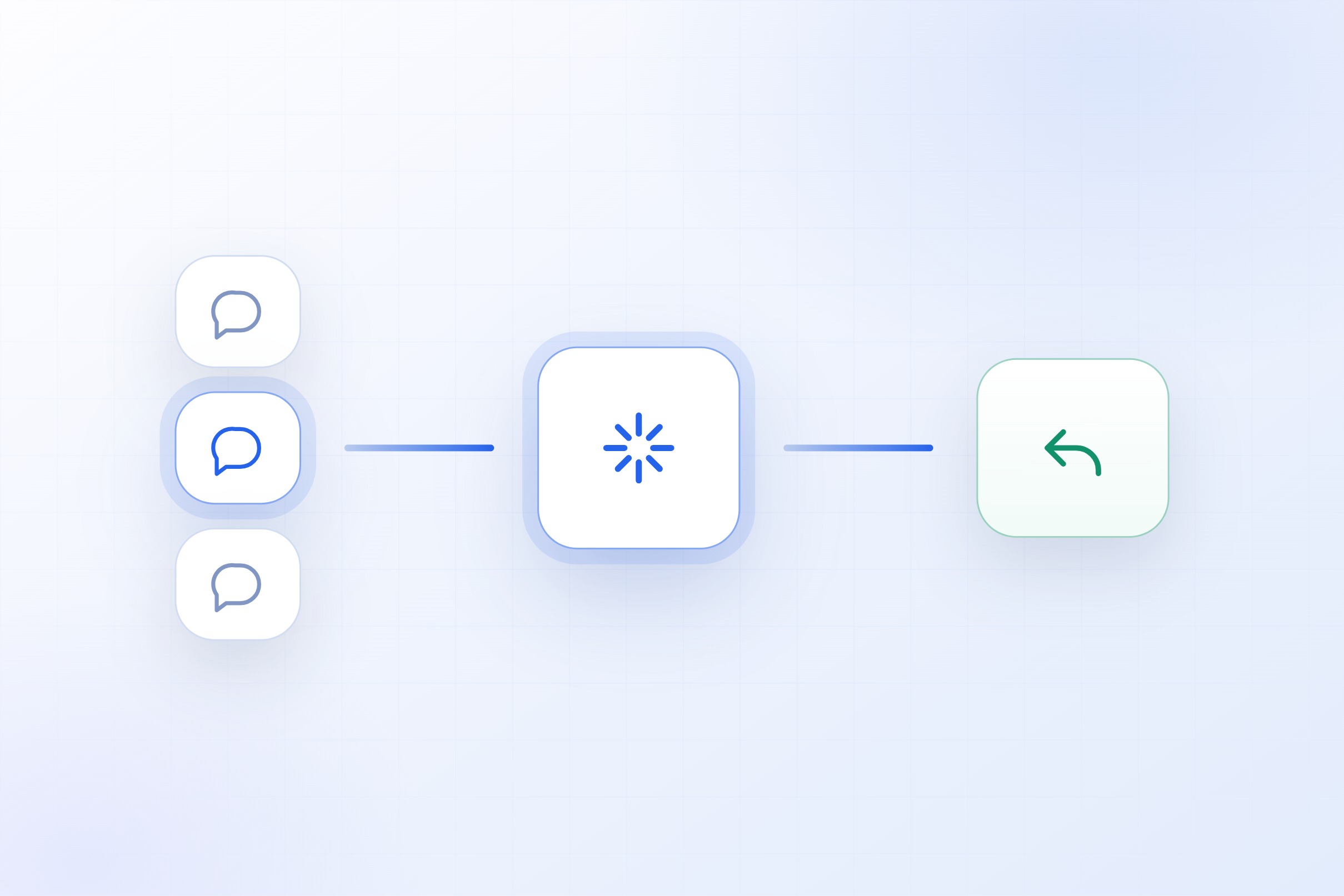
Full email handling from start to finish, AI classification, order enrichment, multilingual responses, and tiered escalation. Connects directly to your existing inbox and store backend.
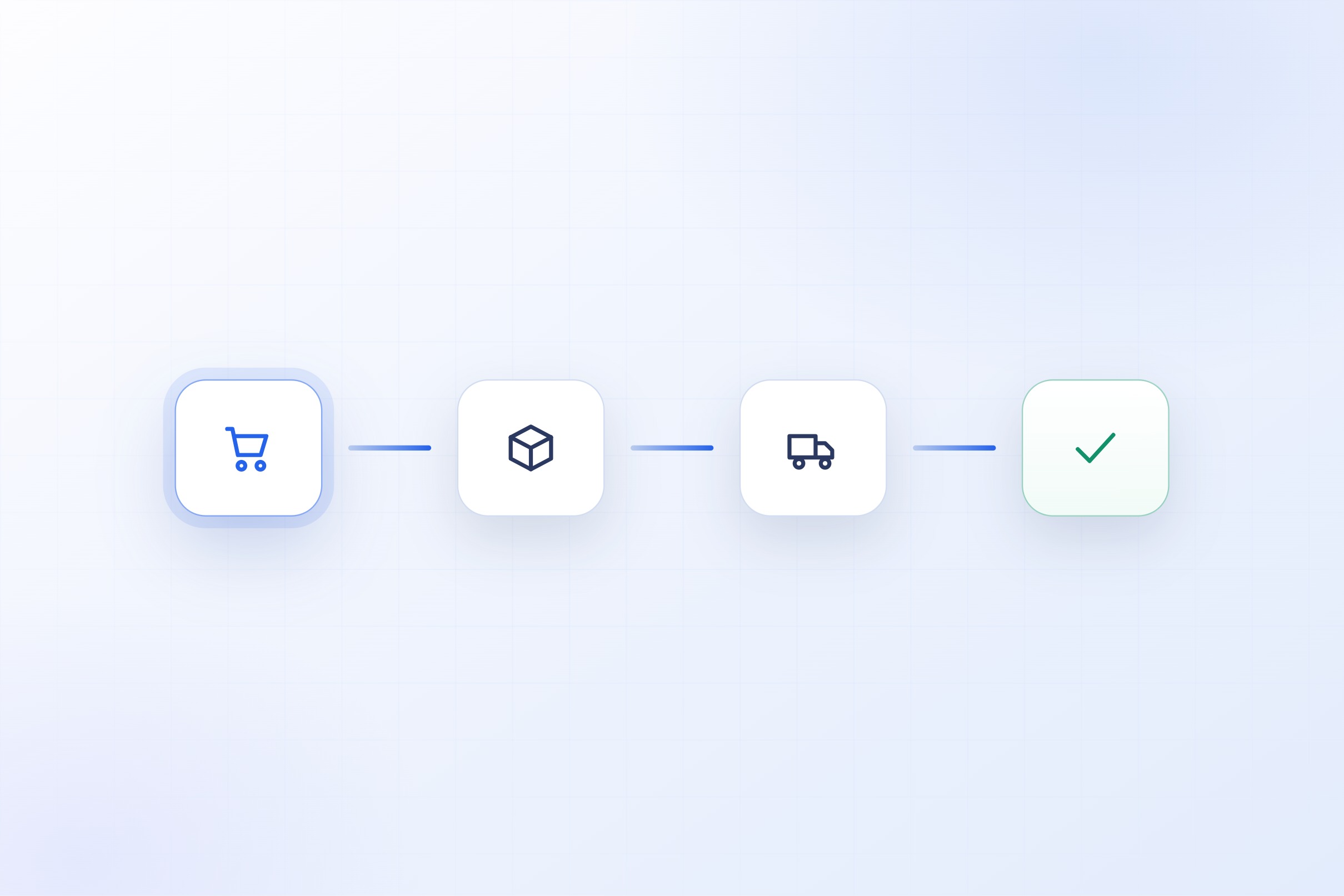
When an order comes in, the system takes it from there. Payment verification, inventory check, warehouse or supplier routing, shipping label generation, and tracking updates to the customer, all without anyone manually moving data between systems.
Return eligibility gets checked automatically, instructions go out in the customer's language, refund status gets tracked, and restocking gets handled without manual input. All of it tied to your actual returns policy and product catalog.
Listing updates, stock alerts, pricing changes, and catalog sync across Shopify, Amazon, and WooCommerce, running on their own. Conflicts get caught, discrepancies get flagged, and listings stay current based on rules you define.
Reviews pulled in and analyzed across every platform. Negative sentiment gets caught early and response drafts come out in your brand voice, ready to send after a quick look.
Follow-up sequences that actually use context. Triggered by behavior patterns and personalized with browsing and purchase history, not just a generic "you left something behind" email.
Product descriptions, SEO metadata, and marketing copy that come straight from your structured product data. Your brand voice, style guidelines, and category templates are baked in from the start, so the output is publish-ready, not something you have to fix before it goes anywhere.
Custom dashboards that bring together data from your store, support tools, ad platforms, and fulfillment systems in one view. Daily or weekly reports on the metrics that actually matter, sent to Slack, email, or a custom web interface.

The CollageDepot automation isn't a concept or a case study written around a prototype. It's a system running in production, handling real customer emails every day, 5,000+ processed, 65% auto-resolved. When we say we can automate your customer service, we're referencing work we've already delivered. As an ecommerce automation agency, our proof is in production, not in proposals.

We build directly against your e-commerce platform's APIs, Shopify, WooCommerce, Amazon, BigCommerce. The automation pulls real order data, real inventory numbers, and real customer records. No screen-scraping, no CSV imports, no workarounds.

We don't believe in fully automated customer interactions with zero oversight. Our systems use confidence scoring and multi-tier handling so routine tasks are automated, borderline cases get human review, and sensitive situations are escalated immediately. Your brand voice stays protected.

Amplence has shipped over 500 projects across industries. We've been building software professionally for more than six years, the AI capabilities are built on top of deep engineering fundamentals, not the other way around.

20 minutes. You describe the problem. We ask questions.

We define what version one looks like with scope, cost, and timeline.

We design the system before building it. You review and approve.

Weekly check-ins. Working progress, not status reports.

Deployed to production. You own the code. Your team runs it.
AI AutomationAn AI automation agency builds custom systems that automate repetitive business processes using artificial intelligence. This includes workflow automation, AI-powered web applications, document generation, data enrichment pipelines, and intelligent customer service systems. Unlike generic software agencies, we specialize in embedding AI models, like GPT-4o and Gemini, directly into the workflows where they create the most value.
Regular automation follows fixed rules: if X happens, do Y. AI automation adds intelligence to those decision points, it can classify emails by intent, generate documents from context, score risk across multiple data sources, and handle scenarios that don’t fit neatly into if then logic. The result is automation that handles the ambiguous middle ground your team currently manages manually.
Our deepest experience is in legal services, construction, and e-commerce, three industries where we’ve shipped production platforms with published case studies and real metrics. That said, the underlying skills (workflow automation, AI integration, full-stack development) apply across industries. If your business has repeatable processes involving data, documents, or communication, we can likely help.
It depends on the scope. A focused workflow automation connecting a few tools is a different investment than a full-stack AI web application with user management, payments, and admin panels. We scope every project in detail before quoting, you’ll know the exact cost, timeline, and deliverables before any work begins. No vague estimates.
Most projects ship in 2 to 8 weeks depending on complexity. A workflow automation connecting existing tools might take 2-3 weeks. A custom AI web application with RAG pipelines, user authentication, and payment infrastructure typically takes 4-8 weeks. We scope tightly and build in phases so you see working progress throughout.
No. Most of our clients come to us with a business problem, not a technical spec. You describe the process that’s eating your team’s time, we handle the technical translation, architecture decisions, and implementation. Our discovery call is designed to bridge that gap in 20 minutes.
We build with a modern, proven stack: React, Next.js, and TypeScript for frontends; Supabase, PostgreSQL, and AWS for backends; OpenAI GPT-4o and Google Gemini for AI; n8n and Make.com for workflow orchestration; and Stripe for payments. We choose tools based on what the project needs, not what’s trending.
Yes. Every project includes full source code ownership, documentation, and handover. There’s no lock-in, no proprietary frameworks, and no dependency on us to keep things running. Your team, or any competent developer, can maintain and extend what we build.
We’ll tell you. We’ve turned down projects where automation would create more complexity than it solves. The discovery call is free and takes 20 minutes, even if the answer is “not yet,” you’ll walk away with a clearer picture of what’s possible and when it makes sense to revisit.
Book a free discovery call. It’s a 20-minute conversation where you walk us through the problem and we give you an honest assessment. If there’s a fit, we’ll send a scoping proposal within a few business days, scope, timeline, and cost. No obligation either way.
A quick 20 minute call with our CEO, Muneeb, to see how we can help you
Practical systems that reduce manual work, lower costs, and help teams scale.