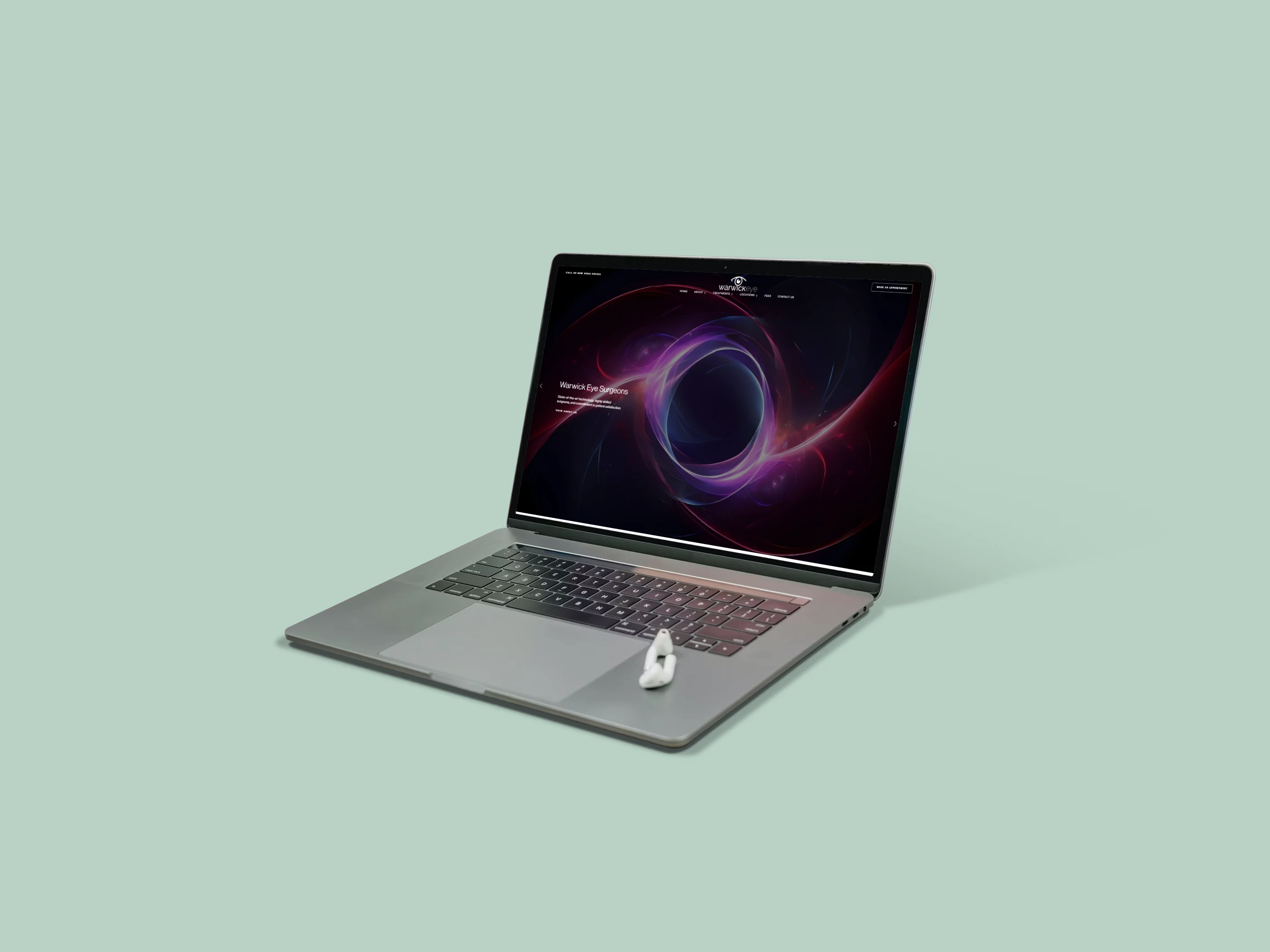
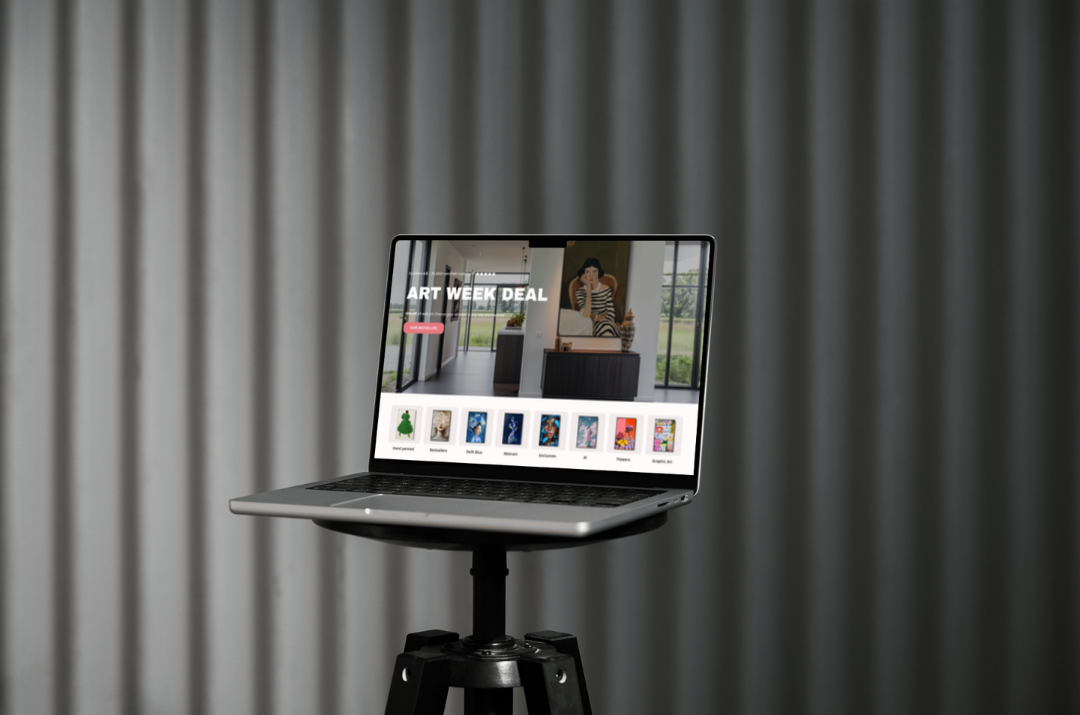
Amplence provides AI chatbot development services for businesses that need more than a basic website chat widget. We build custom AI chatbots, AI assistants, AI customer service chatbots, and AI sales assistants that answer questions, qualify leads, support customers, connect with CRMs and helpdesks, and use your knowledge base or RAG system to provide more accurate, business-specific responses.
A basic chatbot can answer simple questions. A custom AI chatbot can understand context, retrieve the right information, qualify a lead, support a customer, create a ticket, update your CRM, and hand off to a human when needed.
That difference matters.
Most businesses do not need another generic chat widget. They need an AI assistant that understands their services, products, policies, customers, and internal processes. The goal is not to replace every conversation. The goal is to handle the repetitive work, reduce response delays, and give your team more time for the conversations that actually need a human.

Basic chatbots usually depend on fixed scripts, button flows, or simple FAQ responses. They can be useful for very simple questions, but they often fail when customers ask follow-up questions, use different wording, or need help with something specific. A modern AI chatbot for website support should be able to understand natural language, search approved knowledge sources, and provide helpful answers without forcing the user through a rigid flow.
People do not want to wait hours for answers to common questions. An AI customer service chatbot can help customers get instant responses about pricing, availability, policies, order status, booking steps, service details, and common support issues. When the chatbot is trained and tested properly, it can reduce repetitive support work while still escalating complex or sensitive cases to your team.
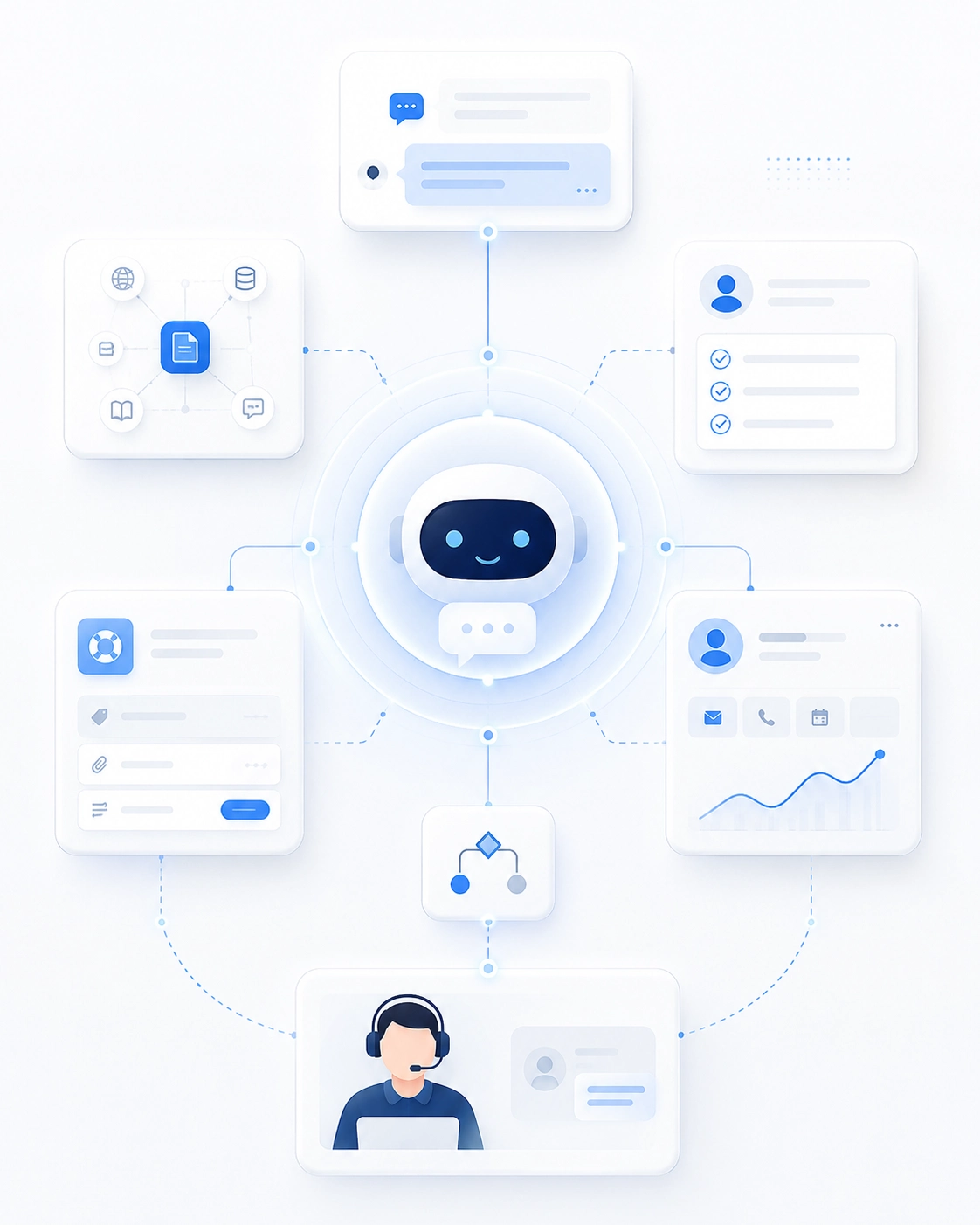
The real value comes when your chatbot is connected to the tools your business already uses. A custom AI assistant can work with your CRM, helpdesk, ecommerce platform, booking system, knowledge base, internal documents, spreadsheets, Slack, email, or custom APIs. Instead of only answering questions, it can support the workflow behind the conversation.
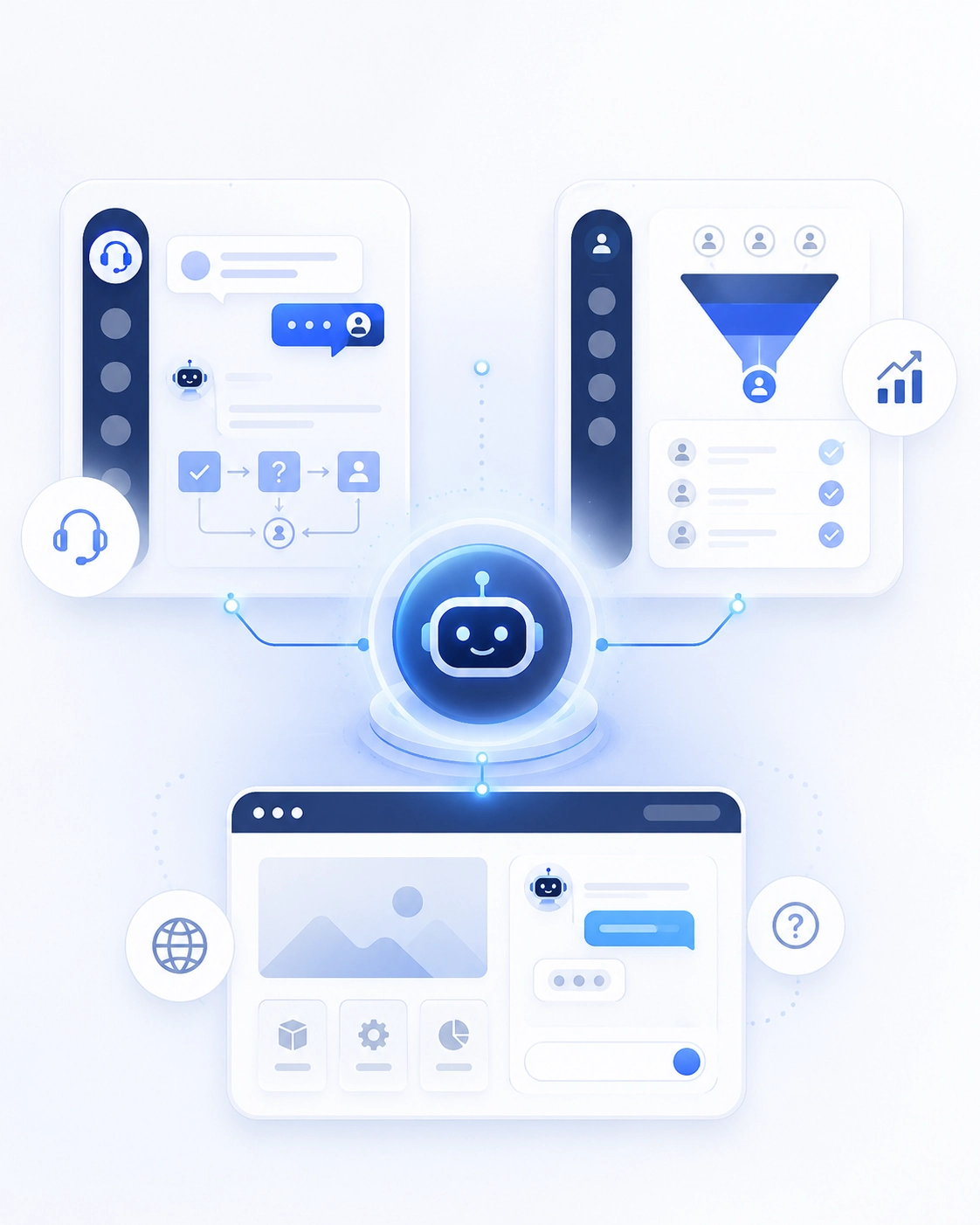
We provide AI chatbot development services for customer-facing and internal use cases. Each chatbot is designed around your business model, your data, your tools, and the type of conversations you need to automate.
We build AI chatbots for customer support that can answer product questions, explain services, troubleshoot common issues, guide users through next steps, and escalate cases when human review is needed.
This can work for websites, SaaS platforms, ecommerce stores, service businesses, support portals, and internal helpdesks.
An AI chatbot for lead generation can ask qualifying questions, understand user needs, recommend the right service, collect contact details, and send qualified leads to your CRM or sales team.
Instead of using a static contact form, you can give visitors a guided conversation that helps them understand what they need and helps your team prioritize serious opportunities.
We build AI chatbots for websites that can act as a front-line assistant for visitors. The chatbot can answer questions about your services, pricing, process, FAQs, case studies, industries, timelines, and next steps.
This is especially useful for businesses where visitors often need education before booking a call or submitting a form.
An AI customer service chatbot can help reduce repetitive support requests by answering common questions, retrieving policy details, checking approved information, and directing users to the right next step.
For higher-risk conversations, we can add fallback rules, confidence checks, and human escalation so the chatbot does not guess when it should not.
An AI sales assistant can support your sales process by qualifying leads, collecting project details, answering service questions, summarizing conversations, and creating follow-up tasks.
This can be useful for agencies, B2B service companies, SaaS businesses, real estate teams, ecommerce brands, and companies with high inquiry volume.
Not every AI assistant needs to be customer-facing. We also build internal AI assistants for teams that need fast access to company knowledge, documents, SOPs, policies, project details, client information, or operational data.
An internal assistant can help your team find answers faster, draft responses, summarize information, and reduce repeated questions across departments.
If your business serves customers in multiple regions, we can build multilingual AI chatbots that respond in different languages while using the same approved knowledge base and business rules.
This can be useful for ecommerce, support teams, international services, travel, logistics, healthcare support, and global SaaS companies.
For businesses that need voice-based interaction, we can help design voice AI assistant workflows for call handling, appointment support, lead qualification, FAQs, and customer service routing.
Ecommerce support teams answer the same order, shipping and returns questions all day. We build AI customer service chatbots that look up live order data, reply in the customer's language and escalate the edge cases to a person.
For CollageDepot, a Shopify store, our AI support system now handles 5,000+ customer emails a month in four languages, resolves 65% automatically and replies in under 60 seconds. Read the CollageDepot case study.
Larger teams need more than good answers. Enterprise AI chatbot development adds role-based access, approved knowledge sources only, audit logs of every conversation, human review for sensitive topics and deployment on infrastructure you control.
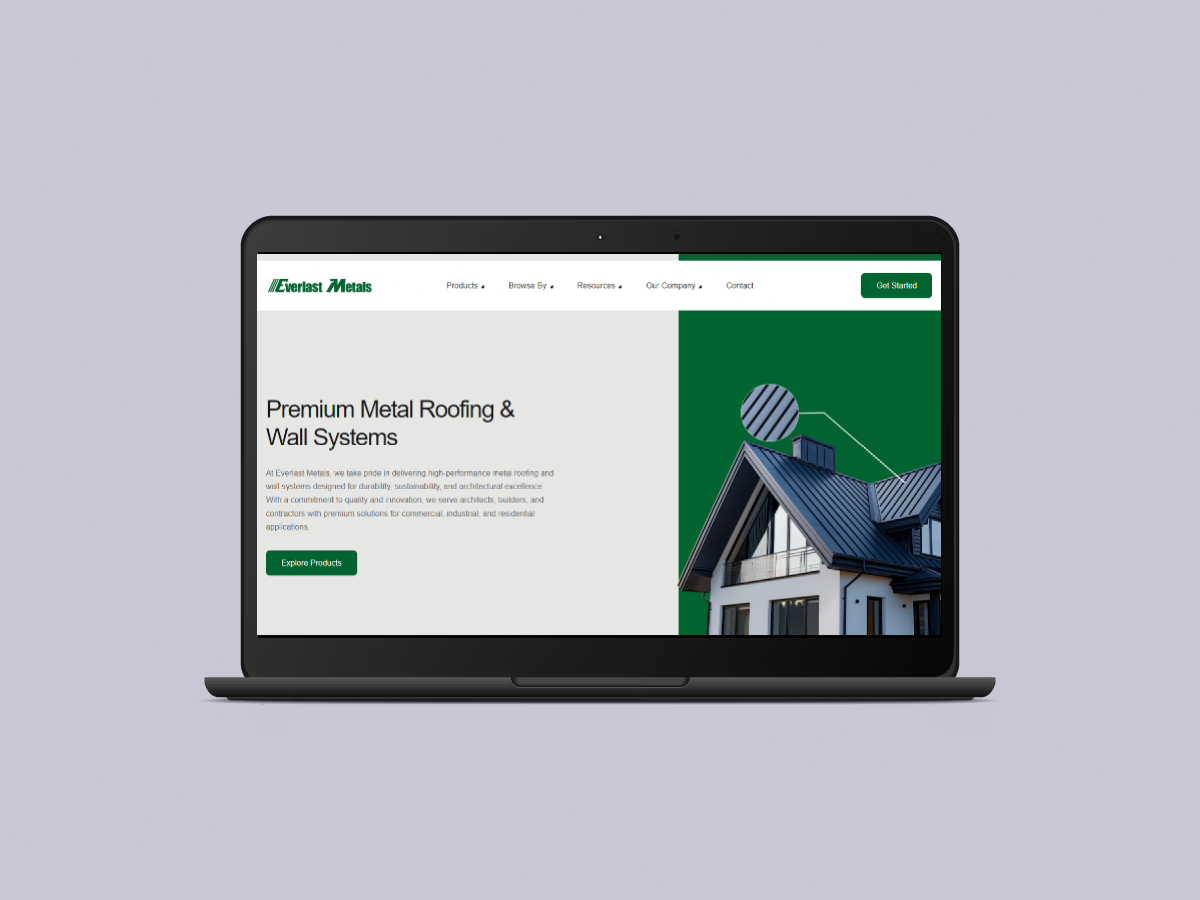
Most custom AI chatbots take 4 to 10 weeks from kickoff to launch, depending on the number of integrations, languages and approval steps. For reference, the CollageDepot multilingual support system took 2 months, and a single-role product assistant like our Everlast Metals demo is scoped at about 6 weeks.
We confirm the exact quote after a short scoping call. Typical starting points:
AI model usage and hosting are paid directly to the providers and depend on your conversation volume.
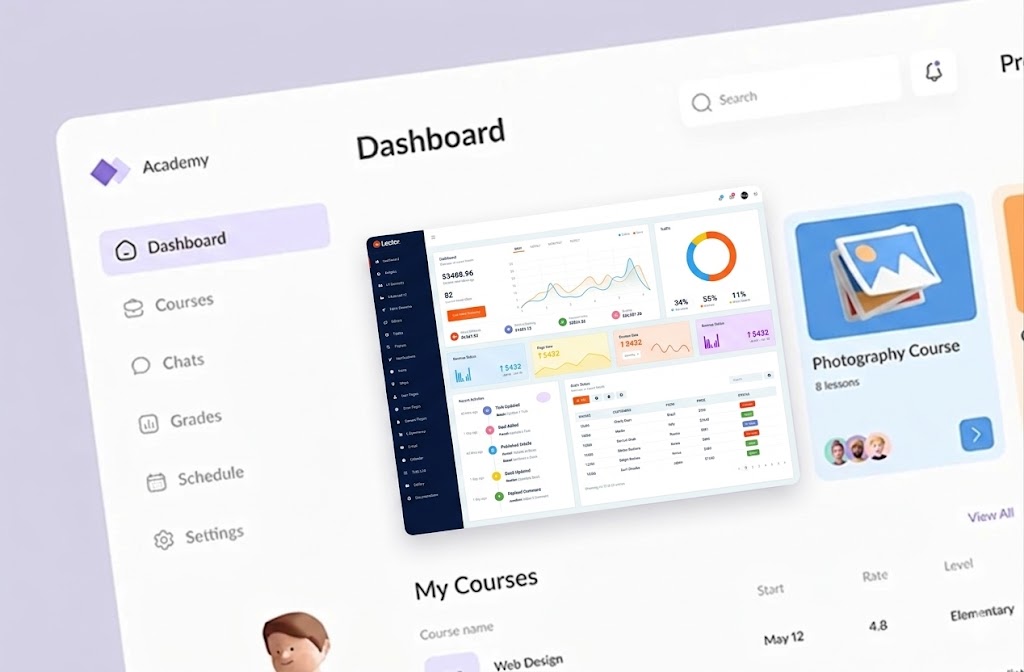
We build a chatbot based on your services, products, workflows, data, and customer questions. It is not a generic widget with your logo added on top.

We define what the chatbot should ask, answer, collect, recommend, and escalate. This includes lead qualification flows, support flows, internal assistant flows, and fallback paths.
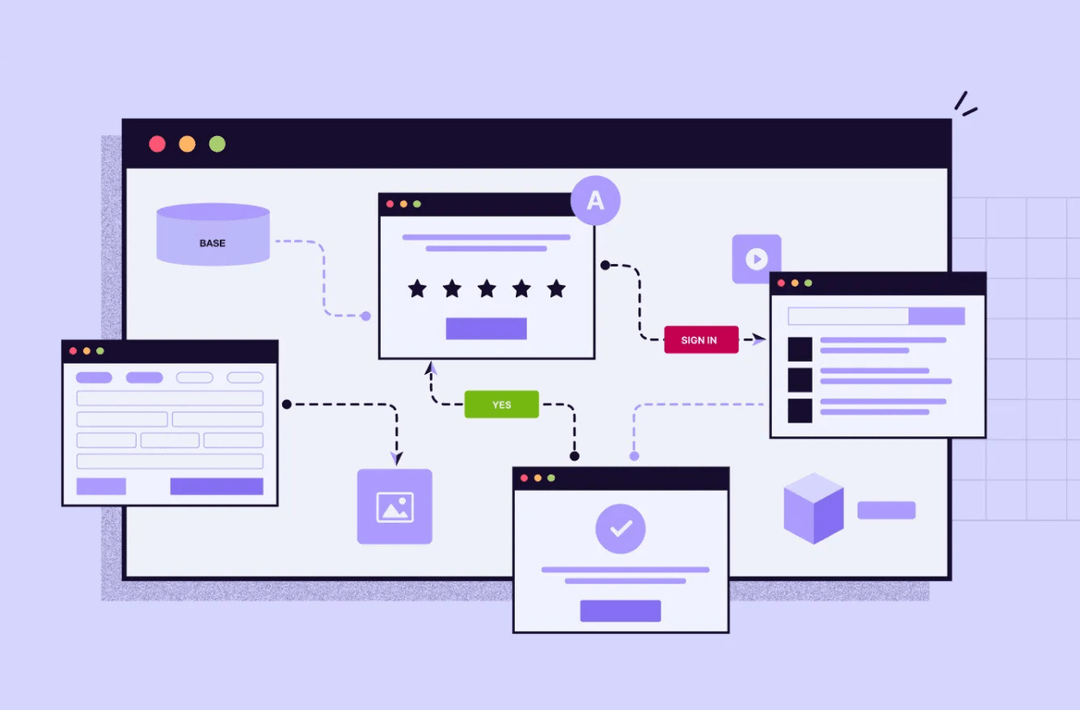
When your chatbot needs company-specific answers, we build the knowledge base and retrieval setup using your approved documents, FAQs, help articles, website content, or internal data.

We connect your chatbot with the tools it needs to use, including CRMs, helpdesks, ecommerce platforms, booking systems, forms, databases, email, Slack, and custom APIs.
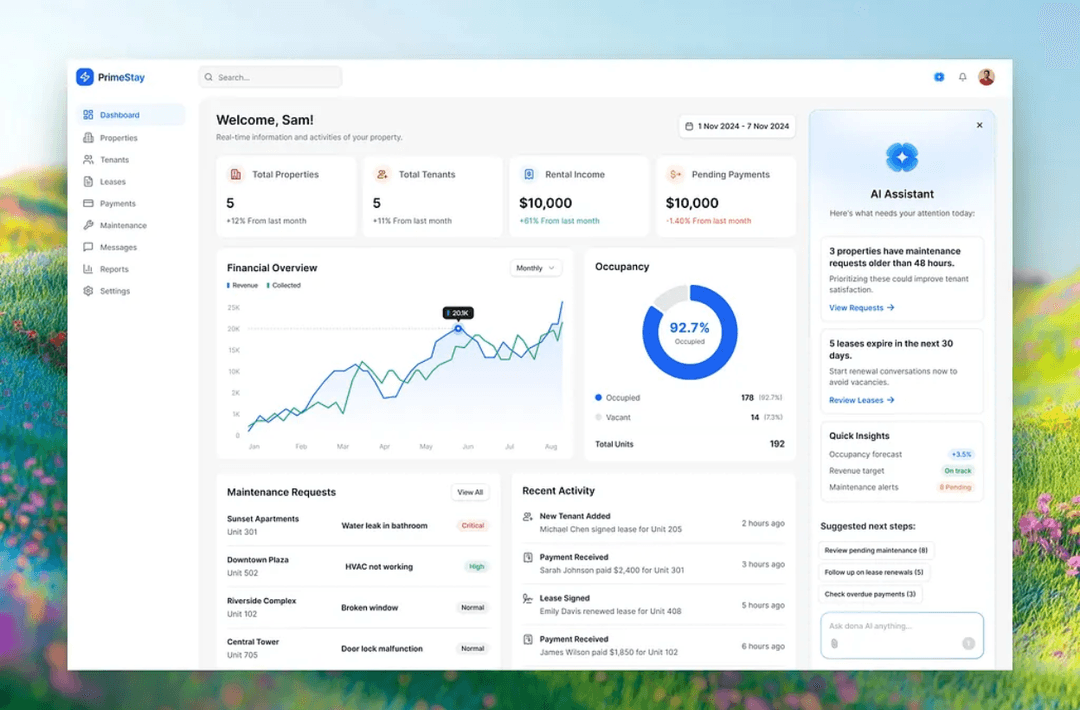
We design the assistant’s instructions, tone, limits, response style, and decision rules so it behaves consistently across different conversations.

Not every conversation should be automated. We add handoff rules so the assistant can escalate sensitive, complex, or low-confidence conversations to your team.
AI chatbot development services involve designing, building, integrating, and deploying custom AI chatbots that can answer questions, support customers, qualify leads, retrieve business information, and connect with your existing tools. A properly built chatbot can work on your website, support portal, ecommerce store, SaaS product, CRM, helpdesk, or internal system.
An AI chatbot usually focuses on conversations. An AI assistant can go further by retrieving information, helping with tasks, connecting to business systems, and supporting workflows. For example, a chatbot may answer a customer question. An AI assistant may answer the question, check the customer record, create a ticket, update the CRM, and notify your team.
Yes. We build custom AI chatbots for websites that can answer service questions, explain pricing or process, qualify leads, collect project details, recommend next steps, and send inquiries to your team. The chatbot can be trained on your website content, FAQs, documents, case studies, and approved business information.
A starter website chatbot trained on your FAQs and pages starts from $1,500. Integrated chatbots with RAG over your documents, CRM, helpdesk or store connections and multilingual replies usually cost $4,000 to $9,000, and enterprise assistants start from $10,000. AI model usage and hosting are paid directly to the providers. We confirm the exact scope, timeline and price before development starts.
Yes. We can build multilingual AI chatbots that support customers in different languages while using the same approved business knowledge base and escalation rules. This is useful for international ecommerce brands, global SaaS companies, support teams, service businesses, and companies with multilingual customer bases.
Book a quick 20-minute call with our CEO Muneeb and we'll help you identify where an AI chatbot or custom AI assistant can create real value, what should stay human-led, and what a realistic first version should look like.
Practical systems that reduce manual work, lower costs, and help teams scale.